
Anthropic and OpenAI trade price cuts with Opus 5.5 and the GPT-6 Sol and Luna models
On September 22, 2026, Anthropic shipped Claude Opus 5.5 with a 20% price cut, and OpenAI answered minutes later with two GPT-6 models, Sol and Luna, priced at half their predecessors. Model choice is now a budget decision as much as a technical one: benchmark cost per token against your real workload.
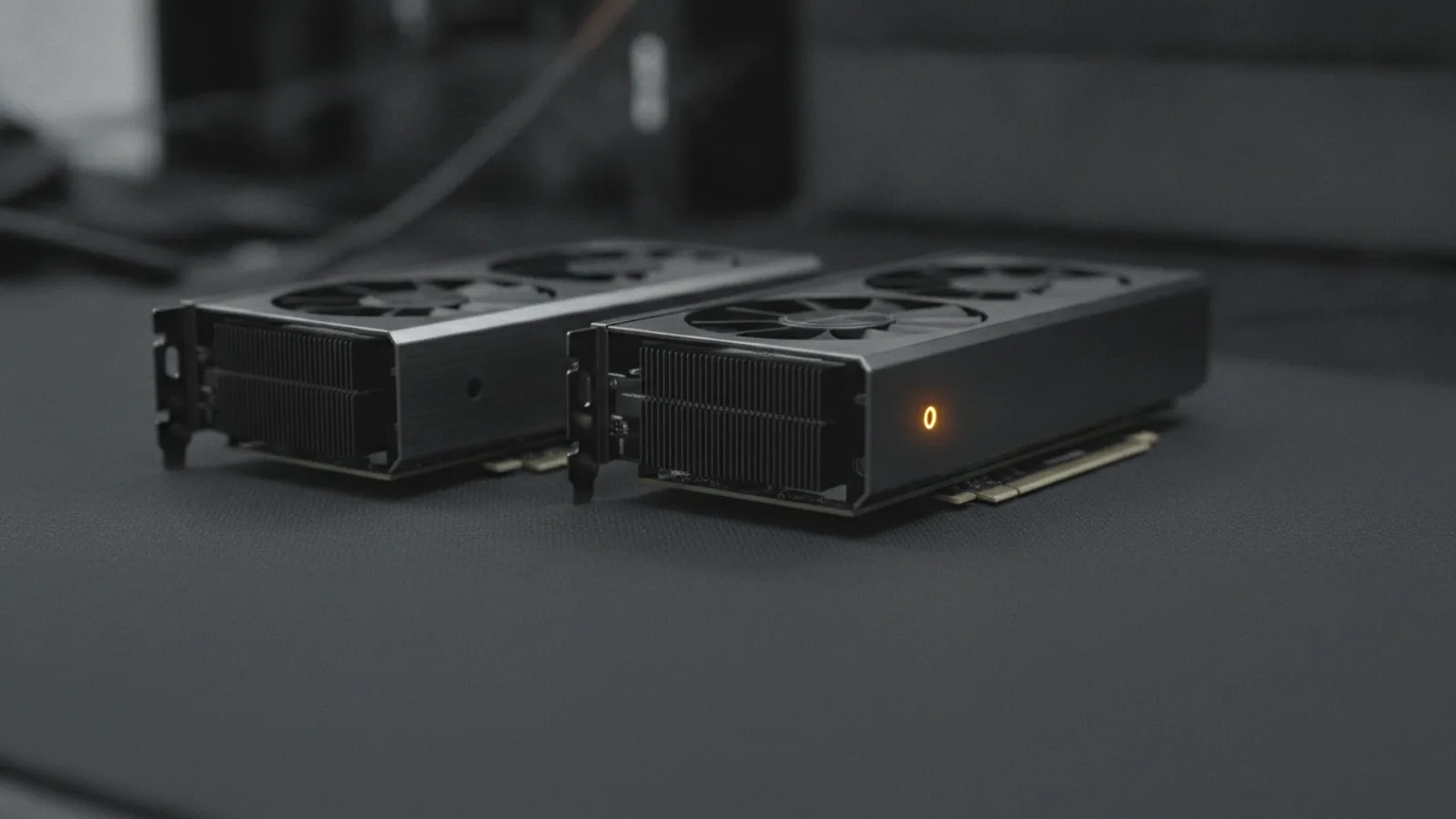
September 22, 2026. Anthropic ships Claude Opus 5.5 and cuts its price by 20%. September 22, 2026, minutes later. OpenAI answers with two GPT-6 models, Sol and Luna, priced at half their predecessors. Why it matters: the frontier model race has entered its comparison-shopping phase, and picking a model is now a budget decision as much as a technical one.
Two labs, one message
On the same day, both labs delivered the same signal: price, more than raw performance, has become the selling point. Anthropic pitches Opus 5.5 as doing “a little more for a lot less money.” OpenAI aims further down the cost curve with two models tuned for price rather than benchmark peaks.
The result is a pricing grid in motion. Opus 5.5 charges $4 per million input tokens and $20 per million output — which, per Anthropic, works out to 40% less than Opus 5 on a typical workload. Cache reads drop 60%, to $0.20. A faster serving mode carries a premium: $8 in and $40 out.
OpenAI halves both models against their GPT-5.6 namesakes: Sol falls to $2 in and $10 out, while Luna sits an order of magnitude below, at $0.10 in and $0.50 out.
Opus 5.5: faster, cheaper, code-first
On paper, Opus 5.5 does not claim to crush Fable 5.1 everywhere: Anthropic says it matches it on most work, while generating more than 30% faster than Opus 5, which shipped in late July. The gap widens on agentic code: Terminal-Bench 4.0 hits 66.4%, against 55.8% for Fable 5.1, and AutomationBench jumps from 26.9% to 40%.
The most dramatic spread is scientific: Terminal-Bench-Science 0.1 gives Opus 5.5 a 58.7%, against 29% for Opus 5. On GDPval-AA v2.1, a knowledge-work test scored in Elo, the new model rates 1846 versus 1708. One tester migrated a 680,000-line codebase in under a day — work Anthropic estimates would have taken a team weeks.
Early customer notes point the same way. Box reports answers 40% less verbose without losing accuracy. GitHub says that, in VS Code, the model “solved more terminal tasks than Opus 5 in less than half the steps.”
Sol and Luna: the counterattack from below
OpenAI builds Sol and Luna on the training methods of GPT-6 Astra, rolling out since September 3, then tunes them for cost. Luna is the cheaper of the pair, aimed at high-volume routine work — summarization, extraction. Sol takes recurring coding and agent work. Astra for Law, a legal-research configuration, arrived September 17.
The published numbers draw a clear picture. Sol completes 33.2% of AutomationBench tasks at $0.27 each, and reaches 68.8% on DeepSWE v1.1, within 1.1 points of Claude Fable 5. Luna hits 66.6% on the same test. Per OpenAI, Sol makes about half as many mistakes as its predecessor, and Luna, pushed to higher effort, matches GPT-5.6 Sol at roughly a hundredth of the cost.
Both labs are also trading on latency and brevity. OpenAI discounts cached input-token reads by 90%, and coding agents can now change reasoning effort and tool sets without breaking the cache. Answers from both sides come back shorter, with less jargon.
What it changes for buyers
The lesson for an SRE or platform lead is blunt: per-token price is no longer a dial, it is the dial. Opus 5.5 is available on the Claude Developer Platform (claude-opus-5-5) and through AWS, Google Cloud, and Azure; Sonnet 5.5 and Haiku 5.5 follow in the coming weeks. Sol and Luna are live for developers (gpt-6-sol, gpt-6-luna) and in ChatGPT Work and Codex for Plus, Pro, Business, Enterprise, and Edu subscribers.
The real question is no longer “which model is best” but “which model costs least for my workload.” A Luna at $0.10 per million tokens changes the economics of a high-volume extraction pipeline; an Opus 5.5 at $4 justifies itself on agentic code, where one successful migration is worth weeks of engineering.
A war triggered by open source
This price race did not come from nowhere. Both labs are responding to pressure from open-weight competitors — DeepSeek, Qwen, Mistral — that sell comparable performance for a fraction of the cost, and to buyers who are increasingly price-conscious about inference bills. The result: per-token price has become a lead feature, not a technical footnote.
| Model | Input ($/M tokens) | Output ($/M tokens) | Positioning |
|---|---|---|---|
| Claude Opus 5.5 | 4 | 20 | Demanding agentic coding |
| GPT-6 Sol | 2 | 10 | Recurring coding, agents |
| GPT-6 Luna | 0.10 | 0.50 | High-volume routine work |
The table tells only part of the story. Cache reads — massive in an agentic workload — have become the real lever: a 60% cut at Anthropic, 90% at OpenAI. On a workload that re-reads the same context at every step, that is usually where the real bill is decided.
The benchmarks hide half the story
The published numbers are impressive but curated. Opus 5.5 and Sol report against Fable 5.1 and Opus 5 — not against each other — so neither launch offers a direct head-to-head. Luna at $0.10 input looks unbeatable until you realize it is tuned for summarization and extraction, not for the agentic loops where Opus 5.5 earns its premium.
That is why the only benchmark that matters is your own. A team migrating a 680,000-line codebase cares about Terminal-Bench 4.0; a team running nightly document extraction cares about cost per million tokens; a team running a customer-facing agent cares about latency and cache-hit rate. Pick the model for the job, not the job for the model.
The timing is deliberate. Both labs know that the next procurement cycle — the one where enterprises lock in a model provider for the coming year — is decided on total cost, not headline benchmark scores. A 20% cut from Anthropic and a 50% cut from OpenAI on the same day is not coincidence; it is the opening bid in a repricing that will keep running through the rest of the year.
Verdict
Anthropic and OpenAI are turning the frontier market into a price comparison: less marginal performance sold at a premium, more models calibrated by use case. If your workload is demanding agentic coding, take Opus 5.5 — its jump on Terminal-Bench 4.0 and its 30% speed pay off quickly on long tasks. If your workload is high-volume routine work — summarization, extraction, classification — Luna at $0.10 input is unbeatable, and Sol covers the middle for recurring code. Always compare on your real workload, not on benchmarks: that is where the price war is won.
References
- SiliconANGLE — Anthropic releases Claude Opus 5.5 and OpenAI counters with two cheaper GPT-6 models (September 22, 2026)
- Ars Technica — New Anthropic, OpenAI models make same promise: a little more for a lot less money (September 22, 2026)
- CNBC — Anthropic and OpenAI launch cheaper models (September 22, 2026)