FR
live
section

Cloud

Amazon EBS extends Volume Clones to cross-account copy

AWS extends Amazon EBS Volume Clones to copy volumes across accounts, with optional re-encryption in the destination account. Multi-account teams can now refresh test environments with current production data, provided they work within the encryption and Availability Zone constraints.


Google commits €13 billion in Finland to build Europe’s AI infrastructure

On September 9, 2026, Google announced €13 billion across 2027-2028 in four Finnish sites — Hamina, Kajaani, Muhos, and Vaala — its largest European investment, backed by nuclear and wind energy contracts. It is a signal about how Europe’s sovereign cloud capacity is concentrating around the Nordics.

Amazon Quick reaches general availability on the desktop to rein in shadow AI

On September 9, 2026, AWS made the Amazon Quick desktop app generally available on macOS and Windows and added a mobile activity feed that consolidates email, calendar, CRM, and messaging. For an organization already on AWS, it is a lever to bring generative AI back under governance: CloudTrail audit, HIPAA, FedRAMP, SOC 2 and ISO 27001 compliance, without moving data out of your environment.

AWS taps Qualcomm for custom inference silicon and 1.6 Tbps optics

On September 8, 2026, Amazon Web Services announced a partnership with Qualcomm for custom AI inference silicon and 1.6 Tbps optical interconnect gear, under a commercial commitment that could reach $60 billion through September 2036. A strong signal about the diversification of AWS’s silicon supply chain — and about the real bottleneck of AI clusters: the network.

Aurora MySQL 8.4.8 adds delayed replication to survive an accidental DROP TABLE

Aurora MySQL 8.4.8, available in early September 2026, adds delayed replication: a replica deliberately applies each change with a configurable lag, making it the only copy that does not reproduce an accidental DROP TABLE or DELETE. Configure it by stored procedure and write the recovery runbook before you need it.

AWS Interconnect connects Azure in preview, capped at 1 Gbps with no SLA

On August 31, 2026, AWS Interconnect multicloud opened to Azure in public preview: a VPC and a VNet linked over AWS’s private backbone, no third-party carrier, but capped at 1 Gbps with no availability commitment. Test it for shared AWS-Azure workloads, but keep your existing circuits until general availability.

CloudFront flat-rate plans become manageable through the API and IaC

On September 3, 2026, AWS opened programmatic management of CloudFront flat-rate plans through the new PricingPlanManager API, the CLI, CloudFormation and the CDK. Teams can now codify subscribing, changing tiers and cancelling a no-overage monthly price, with a two-phase approval that prevents unintended billing.

AWS opens its first Saudi Arabia region and commits 50 MW of AI with HUMAIN

Announced at LEAP in Riyadh, AWS’s first infrastructure region in Saudi Arabia will go live in December 2026, bringing the global network to 40 regions on a planned investment of over $5.3 billion. For teams serving the Gulf, it is the long-awaited answer to data-residency requirements, doubled with a 50 MW AI Zone planned for 2028.

AWS acquires DuckLabs, the company behind DuckDB, and keeps the project MIT-licensed under independent governance

Announced on August 26, 2026 and confirmed in the August 31 AWS weekly roundup, the acquisition of DuckLabs by AWS brings the DuckDB maker in as a subsidiary, without touching the MIT license or the DuckDB Foundation governance. For data teams, DuckDB remains a safe bet; the open question is whether the server-side roadmap tilts toward AWS.

Lambda gains full IAM resource policies, and one API call now wipes every trigger

On August 25, 2026, AWS opened full IAM resource-based policies to Lambda functions: a single JSON document, the complete range of condition keys, and explicit Deny statements. Platform teams gain precision, but PutResourcePolicy overwrites the whole policy in one call — adopt it with a read-modify-write and an audit of existing triggers first.

The C8gn Graviton4 instances at 600 Gbps reach Paris and now span 30 AWS regions

On August 28 2026 AWS made EC2 C8gn instances, powered by Graviton4 and capable of 600 Gbps of network bandwidth, available in the Europe (Paris) region. For teams running virtual network appliances or high-throughput analytics, this European expansion reshapes the cost-performance case for arm64.

Cloudflare’s 13 incidents in 8 days rewrite edge outage response

Between August 7 and 14, 2026, Cloudflare logged thirteen distinct incidents in eight days, touching R2, Workers KV, Durable Objects, and regional traffic across four continents. The lesson is not to flee the edge but to instrument the path between origin and user — where failures escape your monitoring.

AWS Lambda opens Node.js 26 and Python 3.15 runtimes in public preview

On 25 August 2026 AWS Lambda introduced managed runtimes in public preview, a first for the platform, starting with Node.js 26 and Python 3.15. This no-SLA testing channel exists to validate migration ahead of the end-of-support dates of current runtimes.

Verizon puts its network and customer experience on Google Cloud’s full AI stack

On August 24, 2026, Google Cloud and Verizon announced a strategic partnership placing Gemini Enterprise and the Agentic Data Cloud at the heart of the carrier’s network and customer experience. The deal makes telecom the proving ground for the ’agentic enterprise’ and signals a battle for vertical territory among hyperscalers.

AWS opens a Local Zone in Las Vegas for single-digit latency and edge inference

AWS announced general availability of a Las Vegas Local Zone (us-west-2-las-2a) on August 20, 2026, with EC2 C7i/M7i/R7i/C8gn, ECS, EKS, the Application Load Balancer, and Direct Connect. Teams under latency or data-residency pressure should weigh it against a full region before committing.

AWS opens a fourth London Availability Zone to absorb AI silicon demand

On August 19, 2026, AWS added a fourth Availability Zone (eu-west-2d) to the Europe (London) Region, carrying Trn3 and P6 capacity for training and inference. For architects it is both a four-zone resilience win and a clear signal: cloud expansion now runs on AI silicon.

AWS logs four incidents in four months, two on the same network path

Between May and August 2026, AWS suffered four notable reliability incidents, two of them on the same network path linking US-West-2 to the Seattle metro area — with the company still declining to confirm a shared root cause. Teams single-homed in us-west-2 need to audit their single points of failure before next quarter.

DynamoDB adds native vector search and removes the separate vector store

AWS has announced general availability of native vector search in DynamoDB, where embeddings live alongside operational data and a SearchVectors API returns nearest neighbors. If your data already lives in DynamoDB, this is the end of the sync pipeline to a dedicated vector store.

AWS ships five ready-made FinOps dashboards inside its billing console

On August 14, 2026, AWS added preconfigured, read-only managed dashboards to Billing and Cost Management, at no extra cost. It is the baseline FinOps visibility the vendor is finally offering natively — and direct pressure on third-party tools whose entry price starts at 5% of spend.

Daybreak Red and Blue land on Amazon Bedrock with zero-operator access

On August 11, 2026 OpenAI made its Daybreak Red (GPT-5.6 Cyber) and Daybreak Blue (GPT-5.6 Sol) models available on Amazon Bedrock, with zero-operator access enforced at the chip. Here is what to verify before onboarding a frontier cyber model into your cloud environment.

Role Manager automates IAM role creation across six AWS services

Generally available since August 12, 2026, Role Manager automatically creates or reuses the IAM roles AWS services need, from AWS Lambda to Amazon EventBridge. The time savings are real, but a default role is not a least-privilege role — here is how to use it without eroding your least-privilege posture.

AWS and Google Cloud Bury the Lock-In War — Their Joint Multicloud Framework Resets the Rules for CIOs

On August 12, 2026, AWS and Google Cloud unveiled an open-source multicloud interoperability framework that eliminates egress fees and standardizes identity across both platforms. Azure will join before the end of the year. For CIOs, this marks the end of forced infrastructure duplication — and the beginning of genuinely agnostic cloud architecture.

Misconfigured cloud buckets exposed 2.8 billion records in Q1 2026

In the first quarter of 2026, 2.8 billion records leaked through misconfigured S3, Azure Blob and Google Cloud Storage buckets, and 73% of the exposed buckets belonged to organizations with a dedicated security team. The answer is not another dashboard — it is organization-level locks and infrastructure-as-code guardrails.

The European Commission lost 350 GB of data after its AWS account was hacked — the shared responsibility model failed at the first hurdle

A threat actor compromised a European Commission AWS account in early August 2026 and exfiltrated over 350 GB of data, including databases and an internal email server. The incident is a reminder that the weakest link in cloud security is not the provider's infrastructure — it's client-side identity and access management.

Atlassian Rovo Prompt Injection Sends Jira and Confluence Data to Attackers, One Path Still Unfixed

Two independent security research teams have demonstrated that Atlassian's Rovo AI assistant can be prompted to exfiltrate Jira and Confluence data to an attacker-controlled server. One attack path was fixed server-side on July 8, 2026 — the other remained open on August 8 with no fix announced. Atlassian Cloud admins must audit Rovo permissions immediately.

AWS AgentCore Runtime Instances Eliminate Cold Starts for Production AI Agents

Announced at AWS Summit New York on August 7, 2026, AgentCore Runtime Instances bring persistent, stateful compute to Bedrock agents, removing the cold start penalty that plagued real-time deployments. If your AI agents take more than three seconds to respond, the bottleneck is your infrastructure — and AWS just fixed it.

Three Pass-ta-key Attacks Bypass Google Passkeys — Chrome's Cloud Authenticator Validates Compromised Machines Without Checking the TPM

On August 3, 2026, Unit 42 (Palo Alto Networks) published three attacks dubbed Pass-ta-key that allow malware on a compromised Windows machine to hijack passkeys synced through Google Password Manager. The most severe, Golden Pass-ta-key, extracts the master encryption key from Chrome's memory and compromises all current and future passkeys on the victim's Google account.

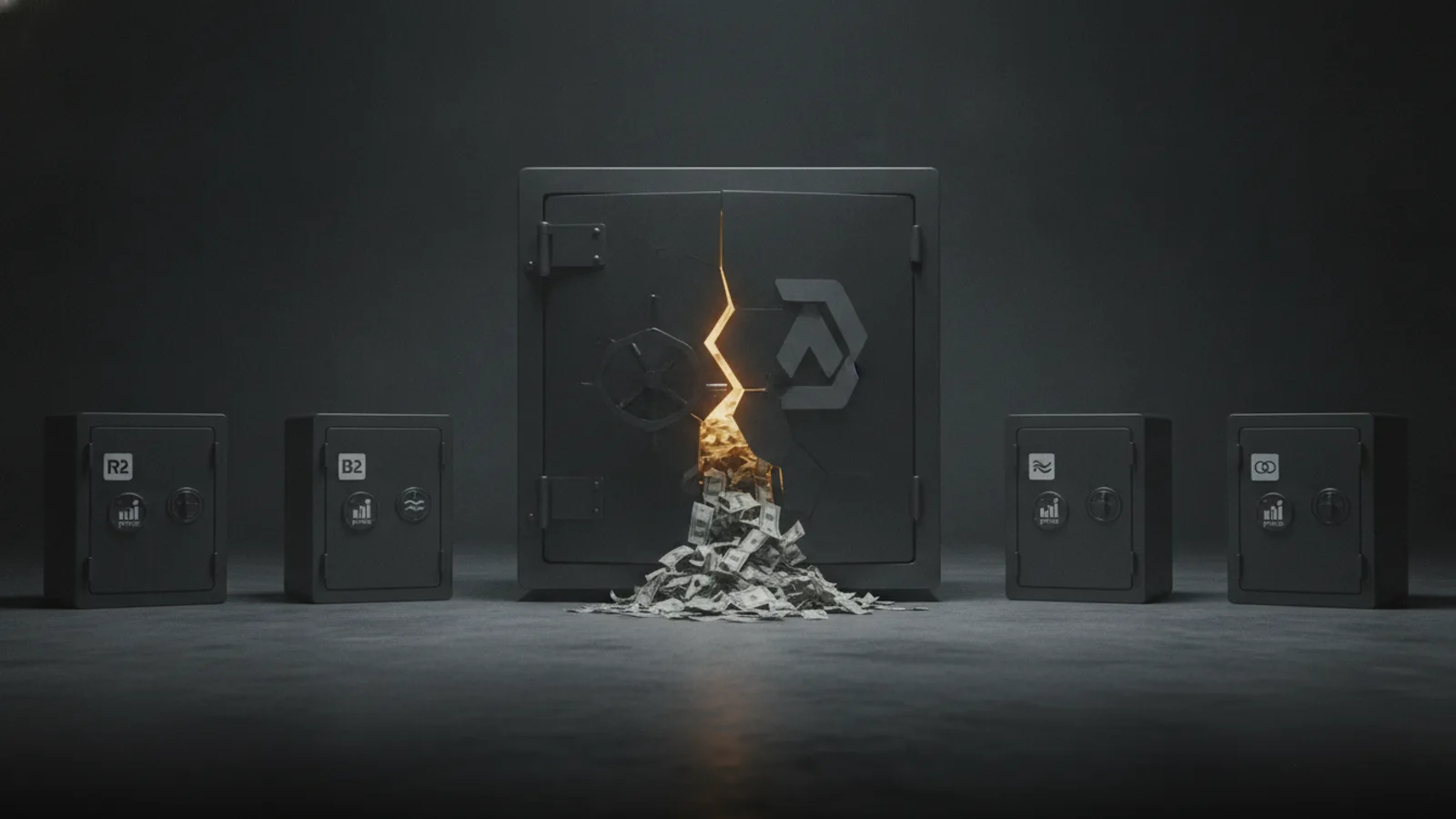
R2, B2, Wasabi and MinIO Replace S3 and Slash Your Bill by 10×

AWS S3 Standard charges $23/TB for storage and $90/TB for egress. Cloudflare R2, Backblaze B2, Wasabi, and MinIO offer the same S3 API at $7 to $15/TB — with free or near-free egress. Here’s which one to pick based on whether you’re doing backups, CDN, or data lakes.

Vultr Challenges Hyperscalers with GPU Cloud Pricing 50 to 90 Percent Lower

In April 2026, Vultr announced that its Nvidia GPU infrastructure costs 50 to 90% less than equivalent offerings from AWS, Google Cloud, and Azure. Startups and SMBs priced out of hyperscaler margins now have a credible alternative — built around AI agents and transparent per-GPU pricing.

Type at least two characters.

navigate open esc dismiss