
AWS opens a fourth London Availability Zone to absorb AI silicon demand
On August 19, 2026, AWS added a fourth Availability Zone (eu-west-2d) to the Europe (London) Region, carrying Trn3 and P6 capacity for training and inference. For architects it is both a four-zone resilience win and a clear signal: cloud expansion now runs on AI silicon.
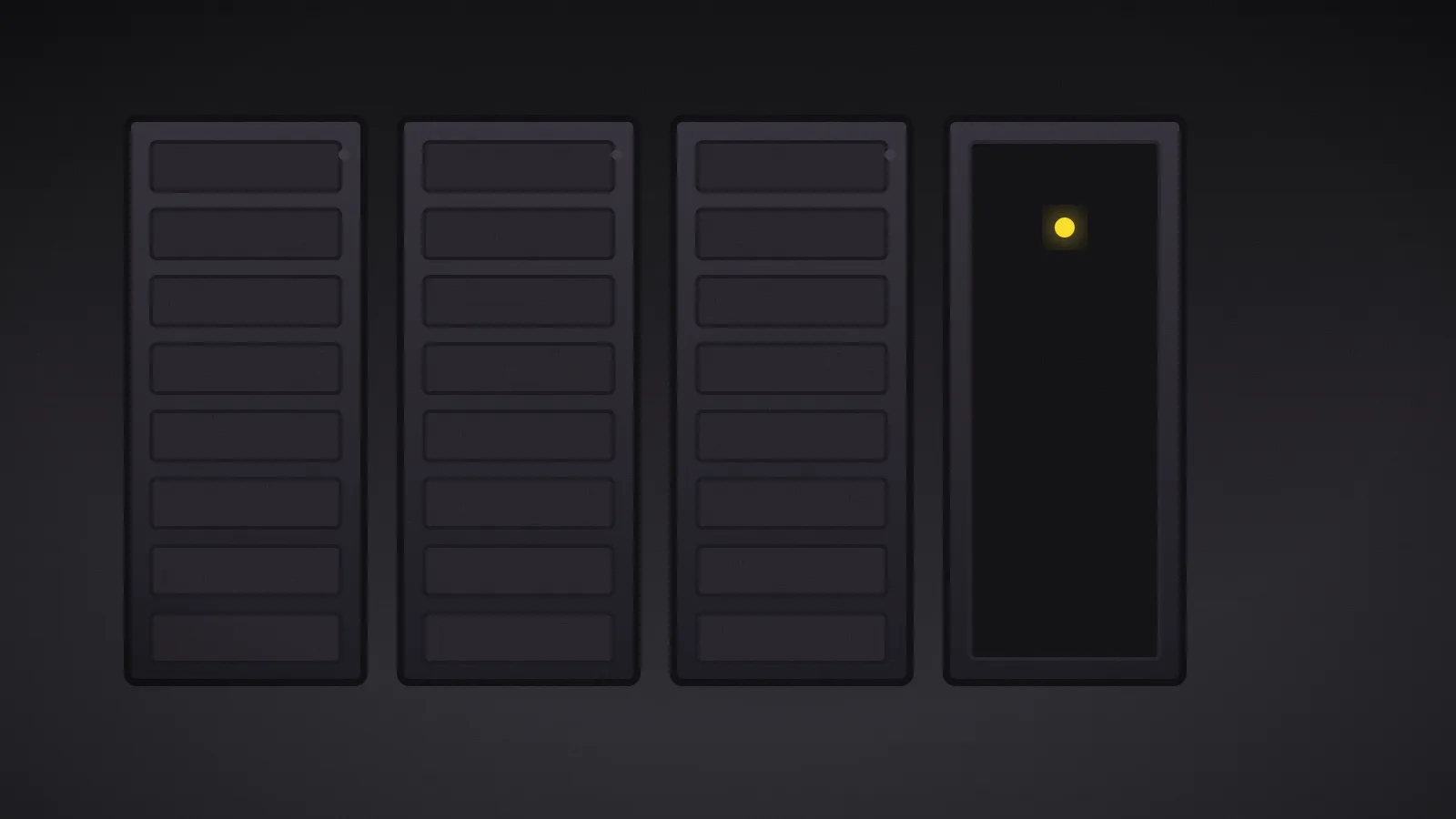
August 19, 2026, AWS added a fourth Availability Zone to the Europe (London) Region. The new zone, eu-west-2d, arrives with a distinctive twist: it is pitched as next-generation AI and ML capacity, carried by the Trn3 and P6 accelerated instances. Beneath the surface of a routine infrastructure announcement, it is the sign that a cloud’s geographic expansion now runs on silicon, not on raw server volume.
A fourth zone, and what it changes
An Availability Zone is an isolated physical site within a region, with independent power, networking, and cooling. The eu-west-2 region therefore moves from three to four zones, and what was once an architectural ceiling becomes headroom: critical applications can now spread their replicas across four isolated locations instead of three.
The real gain is not linear. Moving from two to three zones eliminates the case where a single zone failure takes half the service with it; moving to four does not deliver the same step change, but it relieves capacity-planning pressure during an incident. When one zone is down, the remaining three absorb the load — with four zones, degradation under failure is gentler, and maintenance windows can rotate without dropping a cluster below its quorum threshold.
For teams already running multi-AZ in London, the announcement translates concretely into a new letter to reference in placement groups, subnets, and distribution rules. Nothing else changes: console and API access, standard region pricing, no tooling changes.
The real subject: Trn3 and P6
The announcement does not hide the main point — the new zone is sized for AI. Two families are highlighted:
- Trn3, instances powered by Trainium3, AWS’s fourth-generation custom AI chip, built on 3 nm. Trn3 UltraServers scale to 144 Trainium3 chips per server and deploy into UltraClusters capable of linking hundreds of thousands of chips.
- P6, the family accelerated by NVIDIA Blackwell and Blackwell Ultra, with its P6e UltraServers in GB200 NVL72 and GB300 NVL72.
The notable point is that both families coexist in the same zone. AWS has historically defended its in-house silicon against NVIDIA; putting Trainium3 and Blackwell in the same London datacenter amounts to admitting that customers want both, depending on the workload — massive distributed training on P6e, token economics and agentic inference on Trn3.
Why London, and why now
The Europe (London) Region is one of AWS’s oldest and busiest in Europe, and a natural landing spot for latency-sensitive workloads from the United Kingdom and financial services. Adding a zone rather than opening a new region signals that existing demand has outgrown what three zones could offer in accelerated capacity.
The timing matters too. AI chips remain scarce and expensive; a hyperscaler opening a zone explicitly labeled « AI and ML » is making a long-term capacity bet. For a European enterprise hitting GPU capacity queues elsewhere, the announcement is a supply signal as much as a technical novelty.
What to do about it
Three actions stand out. First, if you already run on eu-west-2, add the zone to your infrastructure models — Terraform, CloudFormation, or the console — and check that your placement groups and subnets reference it correctly; a zone missing from a multi-AZ template is a zone you pay for without using.
Second, if you deploy AI in Europe and latency to Ireland or Frankfurt is holding you back, benchmark Trn3 on your inference workloads before reserving more expensive NVIDIA GPUs. The coexistence of both families in one region lets you compare without leaving a single sovereignty zone.
Finally, treat this announcement as a trend indicator. When a cloud’s expansion boils down to « new zone plus AI silicon », your team’s capacity planning should treat accelerated-instance availability as a first-class variable, alongside cost and latency.
Verdict
If you run critical workloads in London, extend your deployments to four zones: the cost is nearly zero, resilience improves, and you smooth the pressure of a single-zone failure. If you build AI in Europe, test Trn3 on inference before buying Blackwell — both are now in the same region, and Trainium3’s token economics is the deciding criterion. And if you do neither, retain the signal: AI silicon availability has become the engine of cloud expansion, and your next capacity negotiation should account for it.