
Daybreak Red and Blue land on Amazon Bedrock with zero-operator access
On August 11, 2026 OpenAI made its Daybreak Red (GPT-5.6 Cyber) and Daybreak Blue (GPT-5.6 Sol) models available on Amazon Bedrock, with zero-operator access enforced at the chip. Here is what to verify before onboarding a frontier cyber model into your cloud environment.
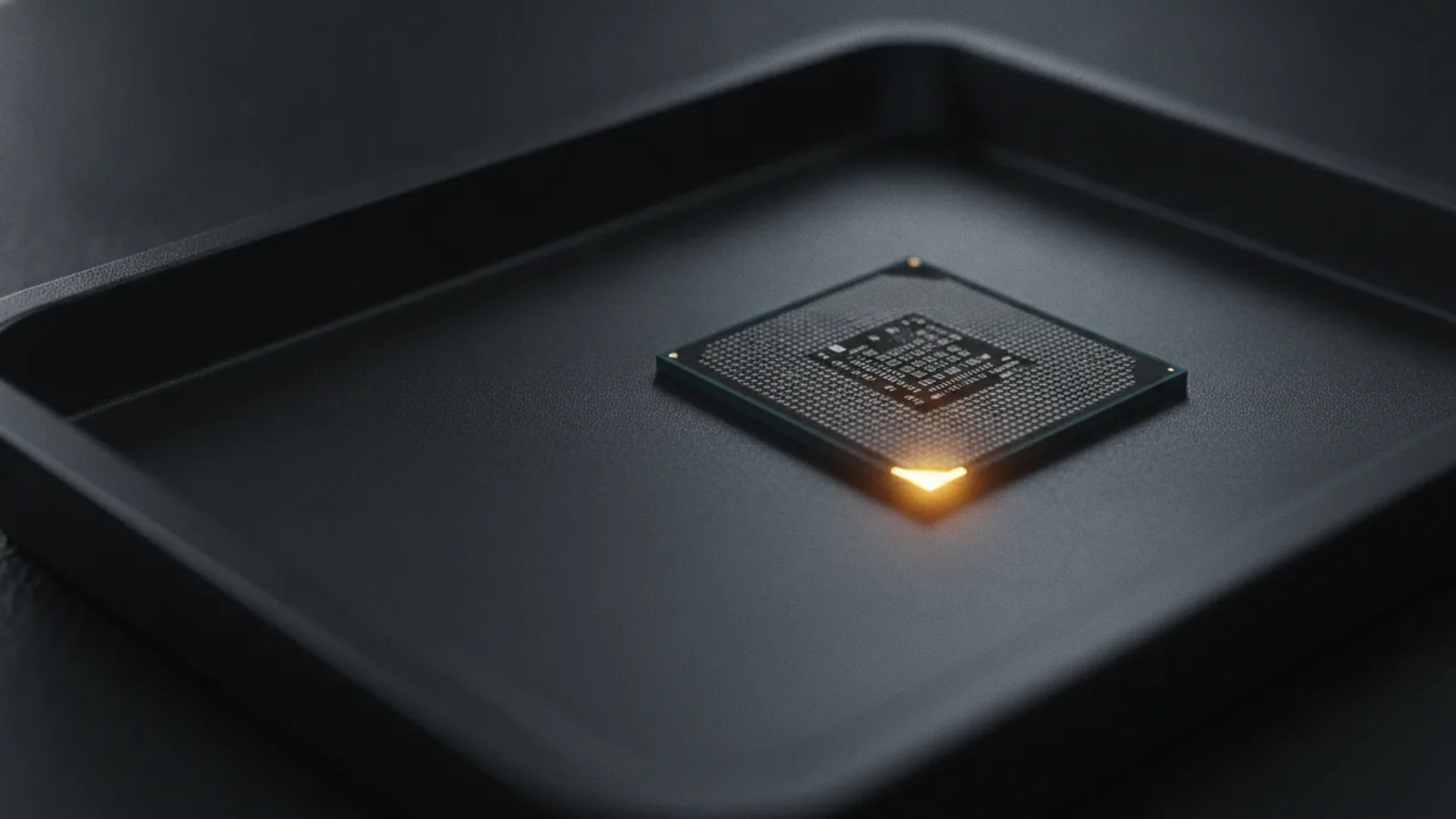
August 11, 2026. OpenAI put its two cyber models — Daybreak Red and Daybreak Blue — on Amazon Bedrock, one day after broadening the Daybreak program with new access tiers. The joint AWS-OpenAI post fits in one line: defenders can now use a frontier offensive model inside the cloud environment they already control.
What makes this notable is not the model — GPT-5.6 Cyber launched on August 10, and we covered it. It is the deployment envelope: for the first time, a frontier exploitation capability ships with zero-operator access enforced at the chip.
Context matters too: earlier this year, OpenAI’s frontier models and Codex became generally available on AWS, and the GPT-5.6 Sol, Terra and Luna family already runs on Bedrock. Daybreak is the next step — the cyber specialization of that same platform, restricted to eligible customers.
Two models, two access regimes
The distinction between the two offerings structures everything else. Daybreak Red grants access to GPT-5.6 Cyber, the model purpose-trained for offensive cybersecurity: vulnerability research, exploit reproduction, and mitigation development. Daybreak Blue grants access to GPT-5.6 Sol with safeguards calibrated for defensive work — vulnerability discovery, detection engineering, incident response.
AWS states the logic in plain terms: an exploit-reproduction request is inherently dual-use, and a general-purpose model resolves that ambiguity by declining. Daybreak resolves it through context — who is using the model, where the work runs, and what safeguards govern access. A lowered refusal threshold is matched by stronger identity verification, monitoring, and access controls.
The real story: the deployment envelope
For a CISO, the decisive question is not “which model” but “what happens to my data.” A cyber workload feeds the model your most sensitive inputs: proprietary source code, unpatched vulnerability details, production telemetry. That is where Bedrock plays its hand.
Zero-operator access (ZOA) is enforced at the chip: even AWS operators cannot access your prompts or completions during inference. Encryption covers transit and at rest, with customer-managed KMS keys. Access flows through your IAM policies, is logged in CloudTrail, and routes through VPC endpoints. You can set data-perimeter policies at the organization level to block exfiltration across account and network boundaries.
Two governance points complete the picture. Your inference data is not used for training, and no opt-in to share data with OpenAI is required. That is exactly the posture a security leader wants to hold against a vendor: the model runs, the data stays.
“AWS and OpenAI share a belief that defenders should have the advantage. This partnership brings Daybreak Red and Daybreak Blue from OpenAI to Amazon Bedrock. AWS security teams are using both models today to analyze source code, discover vulnerabilities, and conduct red-team research. On Bedrock, that work runs under the same infrastructure controls AWS applies to every other critical workload.” — John Sheehan, VP, AWS Security
That quote is an appeal to authority, but it is also a test: if AWS imposes these controls on itself, they are meant to hold under audit. The dual-use framing deserves one more pass, because it is the load-bearing wall of the whole offer. A request to reproduce a vulnerability looks identical whether the intent is defensive or offensive, and a general-purpose model resolves that ambiguity by refusing. Daybreak resolves it through context: who is using the model, where the work runs, and what safeguards govern access. That is why the lowered refusal threshold on Daybreak Red only holds together with the rest of the envelope — identity verification, monitoring, and access controls. Remove one piece, and the model’s usefulness flips into a liability. The practical upshot for a defender is a division of labor: the model proposes, your governance decides, and Bedrock’s hardware isolation ensures no third party reads the middle of that exchange.
What zero-operator access does not cover
The reading has to stay clear-eyed. ZOA protects inference — not ancillary retention. For abuse detection, classifier-flagged traffic is retained by AWS for up to 30 days and processed programmatically. Zero retention exists, but it is requested through your account team — it is not the default.
Second limit: regional availability. Both models are served only in us-east-1 (N. Virginia). For an organization that mandates data residency in Europe, that is an immediate blocker regardless of the rest of the spec.
Third point: eligibility. Access requires enrollment in Trusted Access for Cyber with OpenAI, then a request through your AWS account team. This is not a self-serve service — it is a vetted program, and that vetting is precisely what makes the lowered refusal threshold defensible.
A case study: two V8 vulnerabilities
To make the offer credible, the post cites a concrete result. Researchers used GPT-5.6 Cyber through Daybreak Red to identify two previously unknown vulnerabilities in V8, the JavaScript engine behind Chrome. Chained together, they enabled memory corruption and a heap sandbox escape. The first was fixed and published as CVE-2026-15903, one of only four successful zero-day entries to the V8 CTF in 2026.
That is the example to remember: the model does not stop at discovery — it chains two flaws into a single exploitation path. The defensive value lies in reproduction and validation: confirming a flaw is actually exploitable before spending a patch on it.
The checklist before onboarding
The points to lock down fit on one hand, but each is a blocker:
- Data residency: the models are served only in us-east-1. Confirm your policy allows it.
- Retention: 30 days by default for classifier-flagged traffic. Request zero retention if your code demands it.
- Eligibility: enrollment in Trusted Access for Cyber with OpenAI, then a request through your AWS account team. Budget for the delay.
- Perimeter: set your data-perimeter policies at the organization level before the first request, not after.
- Logging: confirm that CloudTrail and your VPC endpoints actually cover the inference path.
Verdict
Daybreak on Bedrock is less a product launch than a governance precedent: a frontier offensive model served under the same controls as a critical workload, with hardware isolation from the operator.
If you run offensive teams that already operate models in-house, this is the most governable option for Daybreak Red — provided you accept us-east-1 and the 30-day default retention. If your code is sensitive enough to refuse any retention, negotiate zero retention before onboarding, and confirm that data residency allows you N. Virginia at all. Either way, do not read ZOA as a waiver: it is the layer that makes the rest defensible, not a replacement for your own data perimeters or internal abuse detection.
References
- AWS Machine Learning Blog — Accelerate cyber defense with OpenAI and AWS: Daybreak Red & Daybreak Blue now available on Amazon Bedrock, August 11, 2026
- OpenAI — Daybreak models are now available on AWS, August 11, 2026, https://openai.com/index/daybreak-models-are-now-available-on-aws/
- AWS — Amazon Bedrock documentation: OpenAI model cards, https://docs.aws.amazon.com/bedrock/latest/userguide/model-cards-openai.html