
Scaleway builds Europe’s first commercial AMD AI supercomputer in Sweden
On October 13, 2026, at ai-PULSE in Paris, Scaleway announced an AI supercomputer in Sweden built on AMD Instinct MI355X GPUs and the open ROCm software stack — its first deployment outside France. It is Europe’s first commercial AMD AI supercomputer, and a concrete path off the American-cloud-plus-CUDA duopoly.
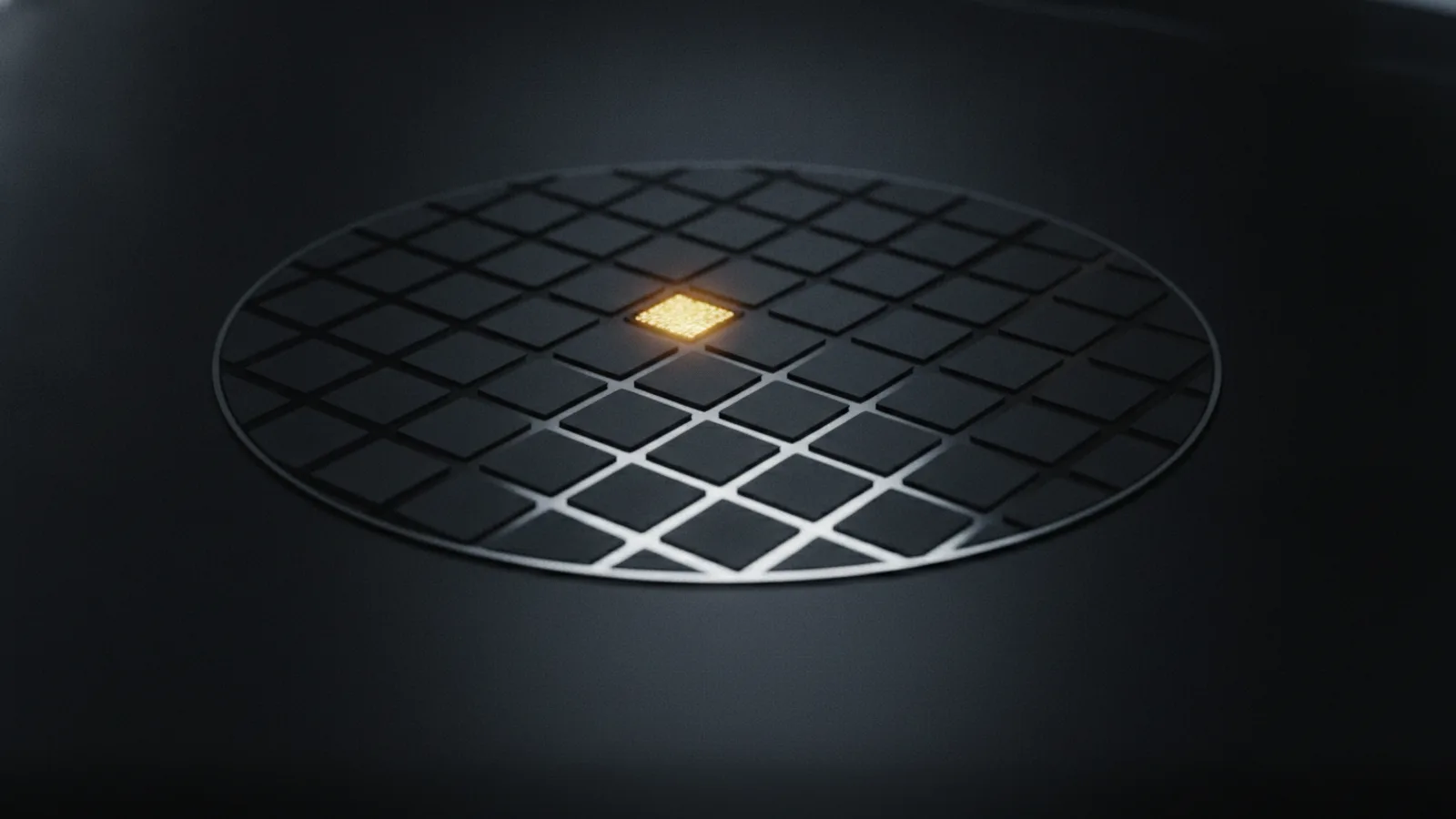
October 13, 2026. At ai-PULSE 2026, its annual conference in Paris, Scaleway announced the deployment in Sweden of an AI supercomputer built on AMD Instinct MI355X accelerators and the open ROCm software stack. October 13, 2026. The French cloud provider, a subsidiary of the iliad Group, confirmed it is its first supercomputer installed outside France. June 2022. Finland brought online LUMI, one of Europe’s most powerful AMD supercomputers — but a research machine, not a commercial service. Why it matters: with AMD and ROCm, Scaleway is laying the first brick of a European, commercial alternative to the American-cloud-plus-CUDA duopoly, and doing it on largely decarbonized Swedish electricity.
Europe’s first commercial AMD AI supercomputer
The adjective matters. Scaleway is not presenting a research instrument but a compute capacity aimed at startups, AI developers, and enterprises across the continent. That is precisely what was missing. Europe already runs AMD supercomputers — LUMI in Finland and other EuroHPC machines — but those serve public research first, with rationed access and long queues.
The announcement flips the logic. A European cloud operator is taking the commercial risk of offering AMD Instinct MI355X accelerators “at scale,” for both training and inference. Damien Lucas, Scaleway’s chief executive, put it plainly: the point is to give European organizations “more choice” and broaden “the diversity of architectures” they can build on. Between the lines, that is an admission of the market’s structural problem: European AI demand is stuck facing supply concentrated among a handful of American hyperscalers and a GPU ecosystem dominated by a single company.
Scaleway disclosed neither the project’s full cost nor its launch date. That is prudent communication — a supercomputer of this size takes years to finance and build — but it also marks the announcement’s limit: this is a strategic direction more than immediately available capacity.
A partner stack to back the promise
A supercomputer is more than a pile of GPU cards. The credibility of the announcement rests on a consortium of suppliers, each bringing one precise layer of the stack.
AMD supplies the Instinct MI355X accelerators and the ROCm platform, the open software ecosystem meant to rival CUDA. Bull, the Atos subsidiary with deep HPC roots, integrates and deploys the cluster, from rack installation and cooling to ongoing hardware maintenance. Giga Computing provides the servers housing the compute. HPE Networking delivers the high-performance Ethernet fabric connecting the nodes. VAST Data supplies the data platform that keeps the compute fed. Finally, Motul — best known as a lubricants maker — provides the liquid-cooling fluid engineered for the extreme thermal densities of AI hardware.
The lineup illustrates a reality cloud buyers tend to underestimate: AI supercomputer performance is decided as much in the cooling, networking, and storage as in the silicon. Scaleway outsources those layers to specialists rather than integrating everything in-house, which accelerates deployment but spreads accountability in the event of a failure.
Sweden, and soon Copenhagen
The choice of Sweden is deliberate. The country offers a largely low-carbon electricity mix, an increasingly decisive factor for infrastructure whose energy footprint is exploding. Scaleway set foot there earlier this year through a partnership with Tele2 to launch a “sovereign” cloud and AI offering. The supercomputer is a continuation of that push.
The same day, Scaleway also announced GPU capacity deployments in Copenhagen, Denmark. The message is clear: the Nordic expansion is the launch pad for a pan-European AI offering, anchored in decarbonized energy and close to customers in the north of the continent.
The geography should also be read as a regulatory play. For a company bound by GDPR or sovereignty requirements, the ability to run AI workloads on European infrastructure — without shipping data to an American cloud — is a commercial argument in its own right.
ROCm versus CUDA: the real battleground
Silicon is only half the war. Nvidia dominates AI compute less through its cards than through CUDA, the software platform that has become the common tongue of AI developers for more than fifteen years. PyTorch, TensorFlow, vLLM, and nearly every major framework were optimized for CUDA first. Moving to AMD means moving to ROCm — and accepting real friction around compatibility, performance, and debugging.
This is where Scaleway’s project will succeed or fail. ROCm has improved in recent years: PyTorch support is now serious, and projects like vLLM and llama.cpp run on AMD accelerators. But the gap with CUDA remains measurable on the long tail — unusual operators, recent quantizations, niche libraries — where teams lose weeks working around what “just works” on Nvidia.
Scaleway’s argument is twofold. First, diversity: not depending on a single vendor has intrinsic strategic value. Second, openness: ROCm is an open ecosystem where CUDA remains proprietary. For a European decision-maker that resonates — provided the performance follows.
Verdict
If you are a European company training or serving models and looking for an alternative to Nvidia and the American clouds, put Scaleway on your radar — but sign nothing until you have tested your workloads on ROCm. Whether your frameworks — PyTorch, vLLM, llama.cpp — run cleanly on the MI355X is the variable that decides if this supercomputer is a real option or a showpiece. If you watch the market, the announcement matters chiefly as a strategic signal: a European cloud backed by iliad is committing capital to an AMD alternative, and it is the first time a commercial operator has done so at this scale on the continent. The battle for AI compute will not be won on a single supercomputer, but it starts with infrastructure like this.
References
- Scaleway — Scaleway Expands AI Infrastructure in Europe With New AMD Instinct GPU-Based Supercomputer in Sweden, October 13, 2026
- Reuters — Scaleway to build AMD-powered AI supercomputer in Sweden, October 13, 2026
- HPCwire — Scaleway Deploys AI Supercomputer in Sweden with AMD Instinct MI355X GPUs, October 13, 2026
- Data Center Dynamics — Scaleway plans GPU cluster deployments in Sweden and Copenhagen, October 13, 2026
- Tele2 — Tele2 partners with Scaleway to launch a sovereign European cloud and AI offering in Sweden