Cloudflare open-sources Clairic, the extraction model built to replace general-purpose LLMs
On November 18, 2026, Cloudflare released the weights of Clairic, a 27-billion-parameter data-extraction model, alongside a 9-billion-parameter Clairic-flash variant.
 Walid Ettayeb
November 18, 2026. Cloudflare releases the weights of Clairic, a 27-billion-parameter data-extraction model, and Clairic-flash, a 9-billion-parameter sibling. November 18, 2026. Both models ship under Apache-2.0, on Hugging Face and on Workers AI. November 18, 2026. The company owns a strategy it calls “System One”: move narrow, high-volume tasks off general-purpose frontier models. Why it matters: pulling an amount, a date, or a supplier out of an invoice does not require a frontier model billing dollars per million tokens — and Cloudflare is betting enterprises will eventually notice.
An extraction model, not a chatbot
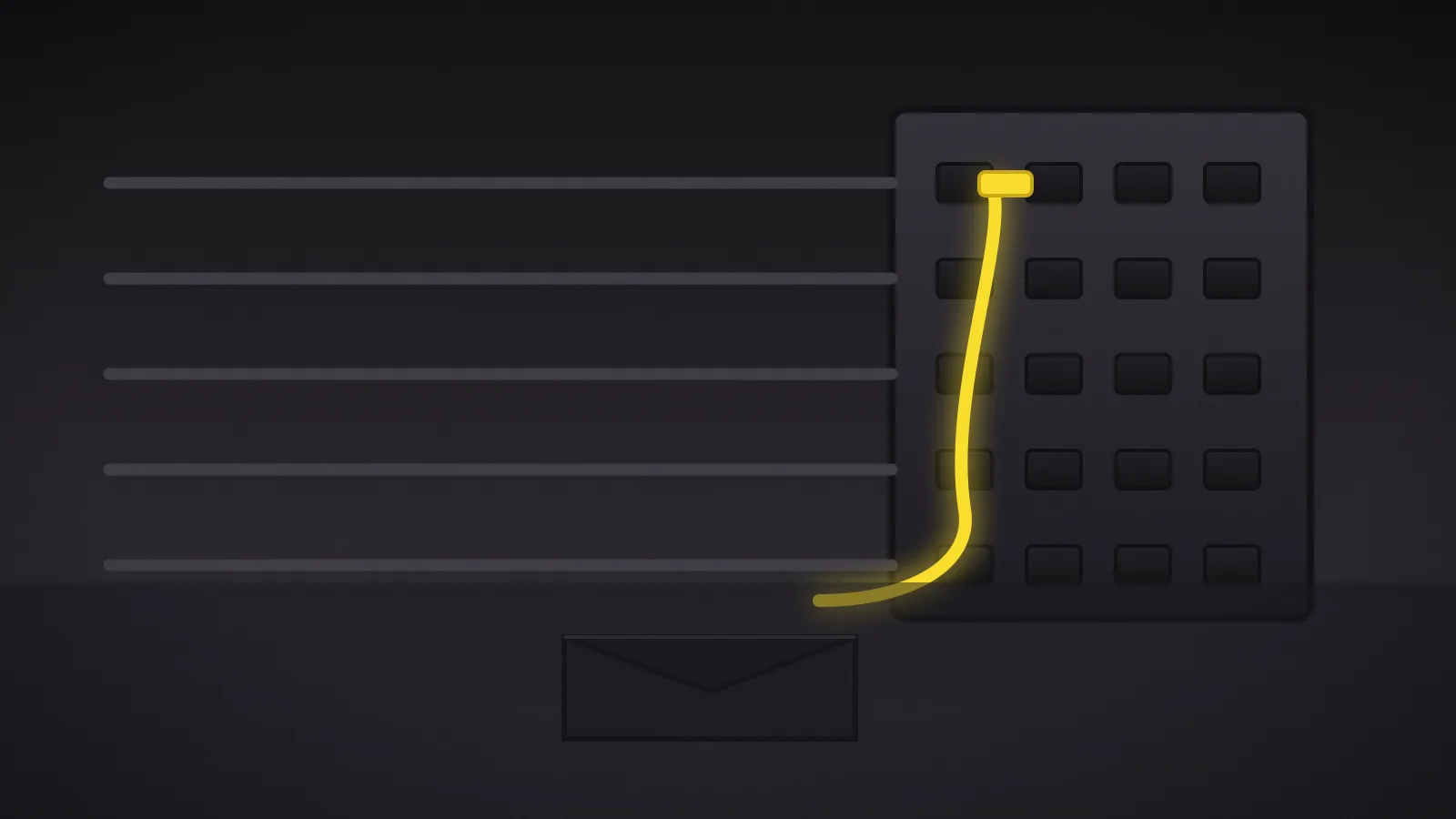
Clairic is not a conversational assistant. It does not write, code, or reason over long contexts. It does one thing: turn unstructured text, images, and short PDFs into typed values, estimates, and forecast paths. A single request can ask for a supplier, line items, and a total even when they sit on different pages — each row returns its description, quantity, and price.
The positioning is that of a workflow tool, not a consumer product. Accepted inputs are text, JSON, optional images, and embedded PDFs, capped at four images or rendered pages per request, 4 MiB per input and 8 MiB combined. Remote URLs are not accepted — the document must be sent directly. Outputs include typed values, lists, nulls, estimates, forecast paths, confidence scores, and the character spans tying each value back to its location in the source text. That last point is what matters to an operator: the output is not free-form text to re-parse, but an auditable structure where every field can be traced to the textual evidence it came from.
Both models sit on Qwen bases: Clairic is built on Qwen3.8-27B, Clairic-flash on Qwen3.5-9B. The Hugging Face repositories ship weights, typed-output components, tokenizer, and Python helpers — enough to run inference locally with PyTorch and Transformers, without ever routing the document through Cloudflare’s network.
The “System One” bet against the frontier race
The announcement is bigger than a model launch. Cloudflare frames Clairic within an explicit technical direction: its Workers AI Superintelligence division — the group behind the Clef system — advocates a “System One” strategy. The idea is to divert narrow, high-volume transactional workloads away from expensive, oversized frontier models and toward small, specialized, cost-predictable models.
That stance shows up in the price sheet. On Workers AI, Clairic costs $0.24 per million input tokens and Clairic-flash $0.10, with no output-token charge even though the architecture generates them. By comparison, querying a frontier model to extract ten fields from an invoice means paying the same “reasoning” premium as writing a synthesis report. Cloudflare puts it plainly: why rent a generalist LLM when a 9-billion-parameter model returns the same typed value at a tenth of the cost, with a 155 ms median latency self-hosted?
The stakes go beyond money. An open-weight model run locally keeps sensitive documents — invoices, statements, contracts — out of third-party API pipelines. For a CISO, that is the difference between handing a document to infrastructure you do not control and processing it on your own machine, under Apache-2.0, with no recurring inference fees and no compliance exposure.
A reworked architecture, and numbers to read carefully
The open release is not a plain export of the preview checkpoint. Cloudflare replaced the single-pass architecture of its October 19, 2026 preview with parallel slot autoregressive generation. In practice, target fields advance concurrently within a serving batch, but each field uses its own previously generated tokens to pick the next token and stops at its own end marker. Dedicated heads handle estimates, forecasts, durations, calculated dates, and explicit arithmetic. The result, per Cloudflare: more accurate extraction on text and images, at a small latency cost.
The reported numbers are precise — that is both their strength and their limit. Across 96 requests of fresh text fields, Clairic reached 335/336 correct answers and Clairic-flash 328/336, versus 295/336 for the preview checkpoint. On 139 tracked customer request shapes and synthetic receipt fields, the two models scored 1,263/1,263 and 576/576 respectively. On a self-hosted server, Clairic posted a 358 ms median and 736 ms 95th-percentile latency; Clairic-flash came in at 155 ms and 328 ms.
Caution is warranted nonetheless. Cloudflare itself concedes that no public extraction benchmark exists, and describes its comparisons — against Liquid AI D1.2 paired with OCR, or Scaledown Extract — as self-reported, directional guidance rather than third-party rankings. The figures document progress against the company’s own preview; they do not establish independent superiority over rivals. The takeaway for a buyer: test on your documents before migrating.
The verdict
If your organization routes invoices, forms, or statements through a general-purpose LLM API, Clairic deserves an immediate pilot: you are paying a frontier premium today for a task a 9-billion-parameter model completes in 155 ms median, at $0.10 per million input tokens, returning a typed, traceable structure instead of text to re-parse. The Apache-2.0 license also leaves you the exit ramp of self-hosting for sensitive documents.
Do not, however, rip out a validated pipeline on Cloudflare’s numbers alone: the benchmarks are self-reported, and with no public extraction reference, the only evaluation that counts is your own, on a representative sample of your documents. The underlying bet is sound — most transactional work does not need a frontier model — but a commercial bet, however well argued, never replaces a measurement.
References
You are reading the AI section.