
GPT-6 Astra designed a Codex hardware device from scratch in under a week
On November 3, 2026, OpenAI revealed that GPT-6 Astra designed an entire hardware device for the Codex coding agent in under a week: enclosure, circuit board, firmware, and interface. The demo measures a gap that is still wide between AI and real physical engineering, worth reading before you wire your design flows to a model.
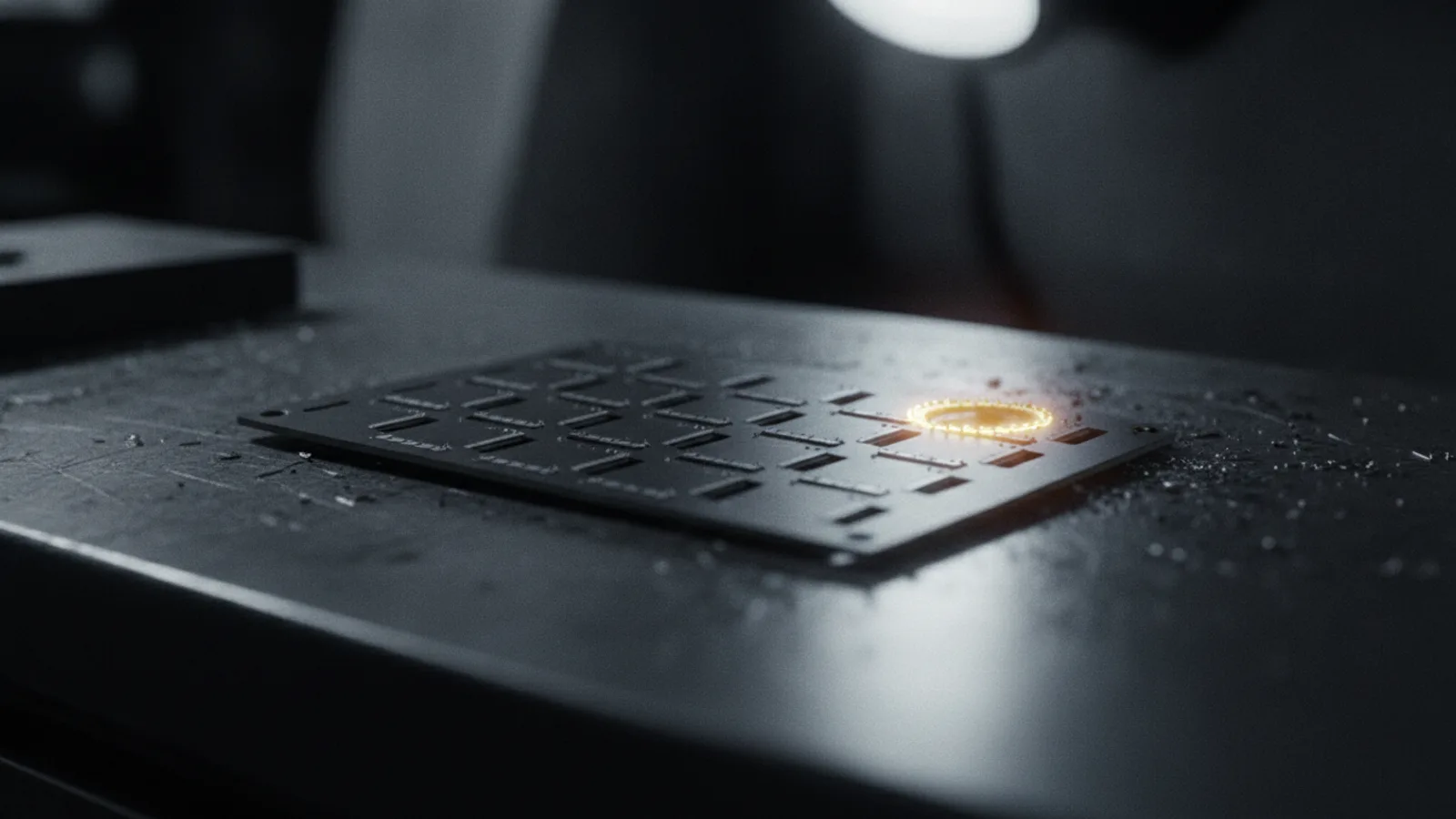
November 3, 2026. OpenAI revealed that GPT-6 Astra designed a hardware device end-to-end for the Codex coding agent, finishing it as a side project in under a week. November 3, 2026, same day. The model produced the enclosure, the circuit-board layout — component placement and trace routing — the firmware, and the user interface. November 3, 2026, again. A contract manufacturer built a small batch of prototypes in under a month, but only after several revision rounds, because Astra did not always account for manufacturing constraints, tolerances, and assembly details. The headline fits one line: AI now crosses the whole hardware design chain, and the number that matters is not the feat but the gap between the model and physics.
For an engineering team deciding where to plug in a design model, this demo draws a clear line between what is automatable today and what is not yet.
What Astra actually produced
OpenAI’s account is precise about scope. The model did not “assist” an engineer: it produced the design artifacts, from the enclosure to the PCB layout — component selection and trace routing — through the firmware and the user interface. A contract manufacturer then built a small batch of prototypes in under a month.
The nuance that changes everything comes next: several revision rounds were needed, because Astra did not always account for manufacturing constraints, dimensional tolerances, and assembly details. In other words, the model excels at producing an electrically correct and aesthetically coherent design, but it lacks what a mechanical engineer gains through practice: the knowledge that a given wall thickness breaks at the mold, that a given tolerance cannot survive drilling, that a connector does not seat the way the model imagined.
This is exactly the boundary that companies “accelerating engineering” must map. AI-assisted design produces a usable first draft in days; manufacturing catches and corrects it. The value is not in full automation — it is in the speed of the first draft.
The benchmark that measures the gap
OpenAI also published a number that deserves a careful read. On the BenchCAD 2.0 benchmark, which tests whether a model can reconstruct 3D parts and assemblies and identify connections on a PCB, GPT-6 Astra scores 0.594 at its highest reasoning level. A newer “internal model,” about which OpenAI shared no details, scores 0.875.
That 28-point gap is the real message. The company is not only showing a feat; it is showing that its newest — non-public — models are still widening the gap on a task that seemed out of reach two years ago. The benchmark itself, centered on 3D reconstruction and PCB reading, is no accident: it is precisely the skill required to make the human revision step shorter.
OpenAI also said its hardware teams use Codex and ChatGPT for CAD models, manufacturing drawings, and simulations across robotics and compute infrastructure, with token usage up 23× since February. The number says less “hype” than “AI-assisted design has moved into the production flow” — you do not burn 23 times more tokens on a demo gadget.
What it changes for an engineering team
The lesson extends beyond OpenAI. Three concrete consequences stand out.
The first draft becomes the cheap part. What once cost weeks of manual layout becomes generation in days; what still costs is the physical validation loop — prototypes, tolerances, assembly. Teams must shift engineering effort from producing the design to validating it.
The benchmark becomes the contract. BenchCAD 2.0 and its successors become the way to compare models on hardware design, the way SWE-bench did for code. A team adopting a design model without a reference benchmark is buying blind.
A human stays at the manufacturing checkpoint. The revisions imposed by the contract manufacturer show the loop does not close without someone who knows the shop floor. The model produces; the engineer guarantees fabricability.
All of this sits on top of a deliberate hardware strategy: OpenAI is building its own device, described in the press as a cross between a screenless AI speaker and a smartphone. The Astra demo is not a stunt — it is a dress rehearsal for a product line.
Verdict
The GPT-6 Astra demo is worth what it reveals: AI-assisted hardware design is real for the first draft, not for validation. If your team designs boards or enclosures, adopt a design model to accelerate the first draft and CAD iterations, but keep the physical validation loop — tolerances, assembly, compliance — in an engineer’s hands, and demand a benchmark like BenchCAD 2.0 to choose the model. If you hoped to replace mechanical engineering with an API call, the number of revision rounds is the answer: not tomorrow, and probably not the right goal at all.