
Google Cloud brings Gemini Robotics ER 2 to the enterprise, behind IAM and BigQuery telemetry
On October 27, 2026, Google Cloud put Gemini Robotics ER 2 into public preview on the Gemini platform, with IAM, security controls, and BigQuery telemetry. Robotics teams can now simulate, train, and deploy a robot brain without leaving the cloud.
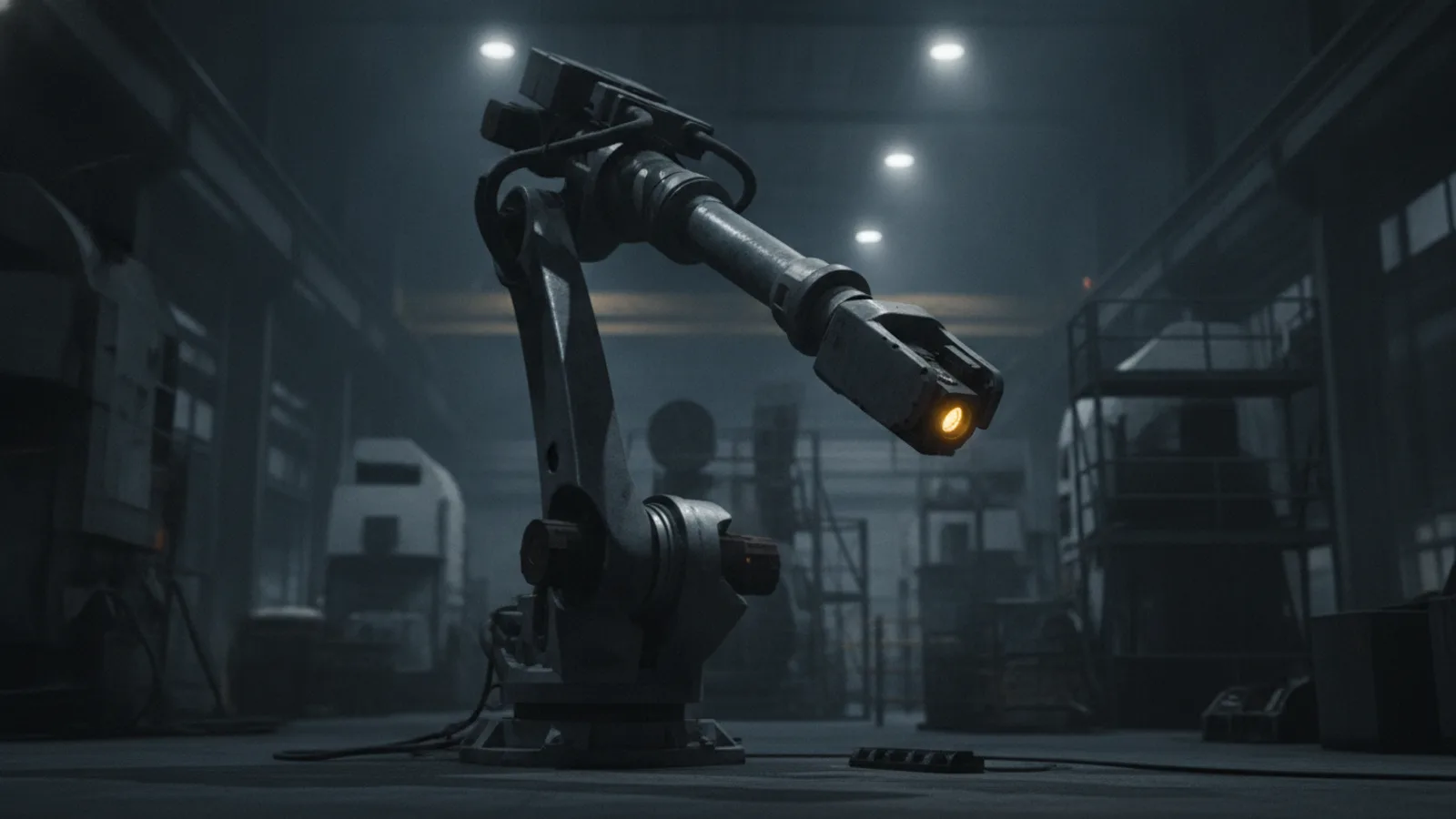
October 27, 2026. Google Cloud brings Gemini Robotics ER 2 to public preview on the Gemini platform. 91.3%. The model’s accuracy at pinpointing the exact frame of a critical event in a video stream, with a mean absolute distance of 0.96 seconds. 4x. The claimed execution speed, at a fraction of the compute cost of many larger model categories. The point that matters: Google DeepMind’s embodied-reasoning model is becoming an enterprise cloud service, with IAM, multi-agent orchestration, and full lifecycle management — the first time robotics has entered the managed catalog this way.
A robot brain becomes a cloud product
Gemini Robotics ER 2 — for Embodied Reasoning 2 — is the specialized model Google DeepMind describes as a robot’s “high-level brain.” It combines spatio-temporal video understanding with long-horizon planning and built-in safety guardrails. In practice, it lets a robot converse naturally with a human, orchestrate low-level action models, execute multi-minute tasks spanning hundreds of decisions, and collaborate within multi-robot teams.
Until now, that capability stayed a research object or a limited service. On October 27, 2026, Google Cloud turned it into a product: ER 2 is available in public preview through Model Garden on the Gemini platform, backed by enterprise IAM, security controls, and lifecycle management. For teams building robots, the message is clear: cutting-edge reasoning can now be rented as a service instead of built in-house.
What the model actually does
ER 2 shines on three fronts. First, physical task verification: the model classifies progress as a binary status, discrete categories, or a continuous score, and pinpoints the exact frame where a critical event happens — for example, when to stop pouring a liquid — with 91.3% accuracy and a 0.96-second mean distance. It can then iterate on a failed step without restarting the whole workflow.
Second, instrument reading: ER 2 reads and interprets more than ten categories of instruments — circular dials, sight glasses, digital displays, linear scales, rulers, and liquid thermometers — directly from visual input. It is a quiet but decisive capability: plenty of industrial equipment has no API, and a robot that reads a screen or a dial becomes the only way to integrate it. Third, tool orchestration: developers declare low-level control interfaces such as VLA (Vision-Language-Action) models, navigation APIs, or custom functions as tools, and ER 2 chains them from natural-language instructions.
From simulation to the factory floor, without a break
The real news is not the model but the chain around it. Google Cloud has designed the full physical AI path. You simulate first: test robot behaviors in MuJoCo-Warp or NVIDIA Isaac Sim, then generate synthetic scenarios and auto-label workcell imagery on the Gemini platform. Then you train: use ER 2’s spatial pointing and progress classification to curate and label demonstration videos in Cloud Storage and BigQuery, then train custom VLA models through the Gemini platform, GKE, or Cluster Director.
Finally, you operate: deploy ER 2 workflows on the Gemini platform with enterprise IAM and built-in function calling, offload latency-sensitive local workloads like SLAM and path planning to factory floors with Google Distributed Cloud, and stream fleet telemetry into BigQuery. That is an end-to-end architecture, not a bare inference endpoint — and it is what separates the offer from an ordinary model API.
Customers already on board
The public preview arrives with names that anchor the product in reality. Boston Dynamics — whose Spot powers industrial inspections — describes video as “a whole new world of possibilities” for verifying that an operation really succeeded. DeepReach AI, which turns human skill into training data, uses ER 2 to understand every recording and find the data that matters, “faster and at a far greater scale.” Arm sees a step toward next-generation robotics compute platforms, and Singapore’s ASTAR IMRE uses it to drive autonomous labs where robots read a microwave-reactor touchscreen that has no API, balance a centrifuge, and move samples safely through a busy lab.
These testimonies converge on one use case: ER 2 acts as an adaptation layer between equipment that does not speak digital and robots that must act on it. Pricing was not disclosed, which remains the main blind spot of the announcement — for a robotics cost line, continuous inference over video streams can quickly become the dominant budget item.
What it changes for teams
For a robotics team, ER 2’s arrival in the Google Cloud catalog shifts the starting calculus. Instead of assembling an in-house reasoning stack — a planning model, video labeling, tool orchestration — you can rent the reasoning layer and focus internal effort on what is truly differentiating: the specific VLA models, the sensors, and the hardware. The flip side is dependency: handing your robots’ brain to a hyperscaler ties part of the roadmap to its availability, pricing, and region choices.
The right posture is to test on a narrow flow, as the announcement itself recommends: a low-level action interface exposed as a tool, validated in simulation before touching hardware. That is the only way to learn whether 91.3% frame-detection accuracy translates, on your workcell, into fewer reworks and less waste — or just a heavier inference bill.
Verdict
If you build robots that must read API-less equipment and adapt to novel situations, evaluate Gemini Robotics ER 2 in simulation this week: the simulate-train-deploy chain is the real argument, more than the model alone. If your budget is tight and continuous video inference weighs heavy, wait for the pricing grid before committing a fleet — with no published price, the marginal cost is still unknown. The larger point stands: robotics has just crossed into managed cloud, and the hyperscaler race over physical AI is only getting started.