XRAID brings declustered parity RAID to XFS for zoned drives
On 13 November 2026, Christoph Hellwig, a longtime XFS maintainer, released XRAID, a declustered parity RAID implementation integrated into the filesystem, built for SMR zoned drives and claimed up to 20 times faster on writes than mdraid.
 Walid ETTAYEBParis ·
13 November 2026. Christoph Hellwig, one of the longtime XFS maintainers, publishes the first public release of XRAID on the kernel mailing list. A year and a half of development separates this code from its earliest sketches. The same day, the patches are posted for review, with an xfsprogs branch and a new xraid utility. Why it matters: parity RAID on Linux has leaned on mdraid for years — and Hellwig is explicit about its limits, which XRAID reworks inside the filesystem, starting with SMR drives.
Parity RAID, the weak spot of Linux storage
Classic parity RAID (RAID 5/6) carries two known flaws. The first is the write hole: a power loss between writing data and writing parity can leave an inconsistent stripe that a later rebuild will only worsen. The second is slow rebuild: on large volumes, a rebuild reads every disk, an operation that takes hours and stresses aging drives.
mdraid inherits this legacy. Hellwig’s presentation slides, bluntly titled "raid-sucks", make the case. On SMR (shingled magnetic recording) drives the problem worsens: these drives dislike in-place writes, which is exactly what a classic parity stripe does.
XRAID inverts the approach. Instead of stacking a volume manager under the filesystem, it integrates RAID into XFS, beneath the Zoned XFS I/O path. The two stated goals are explicit: support parity RAID on zoned devices like SMR drives, and deliver a fast RAID without the write-hole integrity problems.
A declustered layout built for rebuild
XRAID builds on XFS’s zoned allocator, which keeps file data in the realtime (RT) subvolume, separate from metadata. Parity RAID therefore applies only to file data, where it works efficiently, while metadata redundancy — small, in-place-updated objects — is delegated to MD mirroring, better suited than parity.
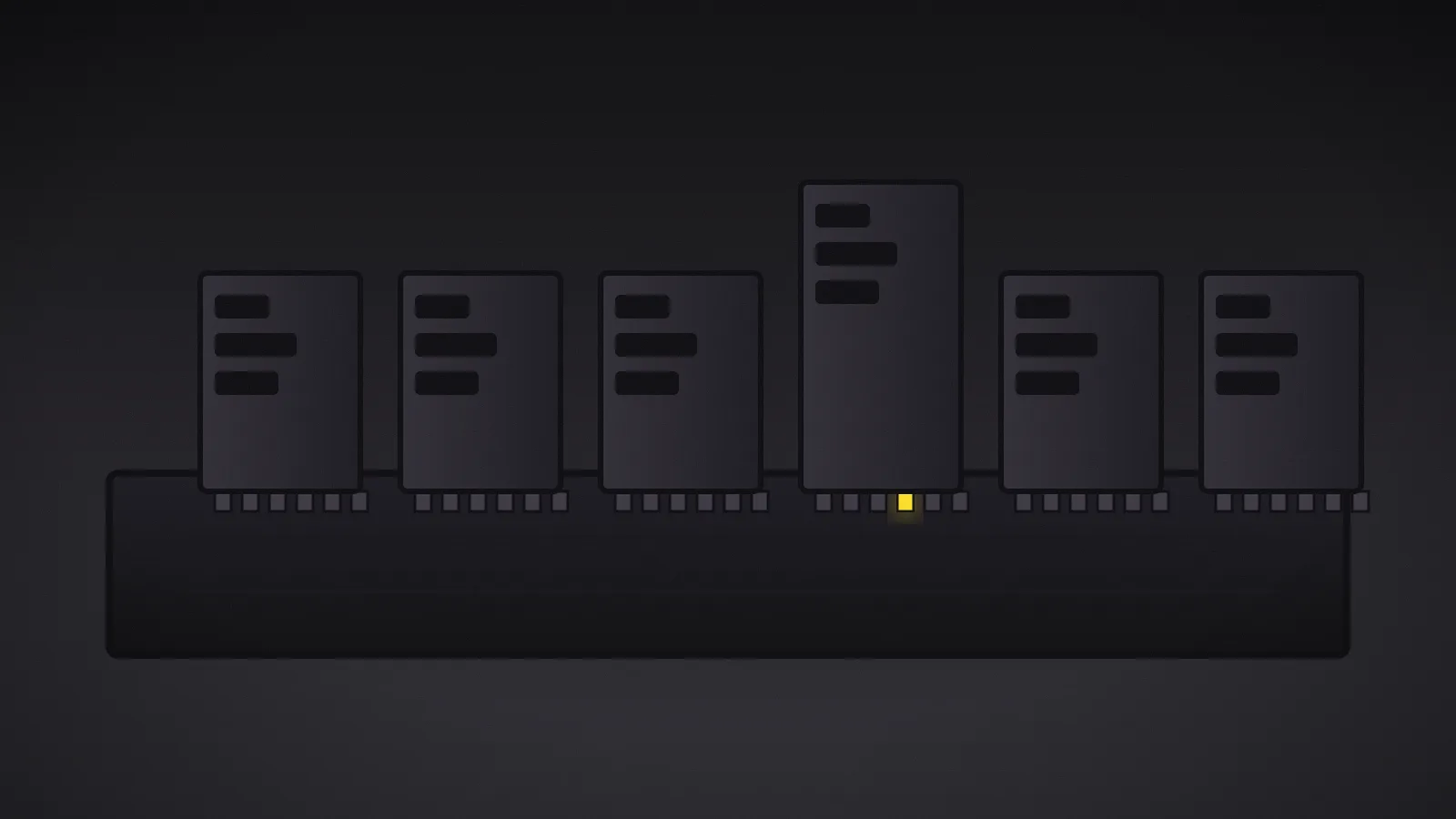
The central piece is declustered RAID. Where a classic RAID 5 spreads data and parity across D+P disks, the declustered variant distributes each stripe across more than D+P disks, all of them participating in reads, writes, and rebuilds. Spare capacity is spread across the pool, which dramatically speeds rebuild: XRAID can rebuild toward every device with free capacity, and the rebuild order is dynamic — zones that lost the most redundancy first, data zones before parity zones.
The announced performance gives the order of magnitude. On conventional drives, XRAID claims writes up to 20 times faster than mdraid. Optimizing for SSDs is not an explicit priority — the author notes the gains hold even without that work.
What zoning changes, and what dRAID already brings
To grasp XRAID’s appeal, start with the constraint of SMR drives. A shingled-magnetic-recording drive requires sequential writes: rewriting a sector in place forces a rewrite of the entire track, collapsing performance. A classic RAID 5/6 stripe updates data and parity in place — exactly the scenario SMR punishes. Zoned XFS answers on the filesystem side by writing sequentially into zones; XRAID extends that logic to the RAID itself, applying parity only to file data.
The idea of declustering RAID is not new: ZFS already does it with dRAID, which likewise spreads data and parity across a pool larger than the strict D+P. XRAID’s novelty is integrating it natively into XFS, with the zoned allocator and the realtime subvolume, rather than stacking a separate volume layer. For a fleet already built on XFS, that is the promise of parity redundancy without changing filesystem ecosystems — where adopting ZFS forces a whole-filesystem migration.
The trade-off is scope: XRAID protects only data, not metadata, which stays on an MD mirror. It is a deliberate choice — metadata, being small and updated in place, suits parity poorly — but it must be folded into any capacity and resilience calculation.
An initial release, not yet ready for upstream
The code’s status is clear and bears repeating: XRAID is not yet submitted upstream. The kernel patches are published for review and testing on the mailing list, alongside an xfsprogs branch adding mkfs support and a new xraid tool. The author’s presentation and early benchmarks look promising, but these are development results on code still iterating.
For teams managing large arrays, the interest is prospective. SMR is returning to low-cost arrays for archive and cold storage, and Zoned XFS is the path XFS has chosen for these devices. A parity RAID that works natively on sequential zones, without a write hole and with fast rebuilds, addresses a real need that mdraid covers poorly.
Three cautions remain: the code’s maturity, the absence of independent benchmarks, and the scope — XRAID covers data parity, not metadata, which stays with an MD mirror. The architecture is coherent, but it is not yet a full alternative to ZFS RAID-Z or Btrfs.
Placement in the ecosystem matters as much as the code. XFS is the default filesystem on RHEL and Fedora and dominates large enterprise arrays; Zoned XFS, which XRAID depends on, is itself still maturing. A native XFS parity RAID would therefore have immediate leverage for teams that refuse to migrate to ZFS or Btrfs to get modern parity redundancy. The open question is whether XRAID clears community review: integrating a RAID layer beneath a filesystem’s I/O path touches invariants the maintainers will want to examine line by line.
The rebuild advantage is the part that translates directly to operations. In classic RAID 5, rebuilding one failed disk reads every remaining disk at full speed and writes a single replacement — the array is bounded by the slowest drive, and the read load ages every disk at once. In a declustered layout, the missing data is scattered, so every disk contributes a little to reconstruction and writes its share to the spares. XRAID goes further by ordering the work: zones that lost the most redundancy rebuild first, and data zones before parity zones, so degraded reads pay less overhead during the rebuild. For a 20-drive pool, that is the difference between a rebuild measured in hours and one measured in a fraction of that.
The verdict
If you run zoned SMR arrays or large pools of conventional drives, XRAID deserves your active attention: the declustered layout and the XFS integration target the two real pains of parity RAID — the write hole and slow rebuilds. Do not deploy it in production: it is an initial test release, with no upstream submission and no independent benchmark, and metadata redundancy remains delegated to MD. If you must choose parity storage today, stay on ZFS RAID-Z or battle-tested mdraid, and benchmark XRAID in parallel on a test array — when it clears the upstream bar, the migration will be ready without urgency.
References
You are reading the Linux section.