Fortinet patches an OSPF flaw that lets an unauthenticated attacker inject false routes
On November 10, 2026, Fortinet published its monthly PSIRT advisories: a flaw in FortiOS’s OSPF process (CVSS 9.3) lets an attacker with no login make the firewall announce false routes, and a flaw in the FGFM channel (CVSS 9.0) runs code on FortiManager without authentication.
 Walid EttayebParis ·
November 10, 2026. Fortinet publishes its monthly PSIRT advisories. CVE-2026-126253, a 9.3 flaw in FortiOS’s OSPF process, lets an attacker with no login make the firewall announce false routes. CVE-2026-126261, rated 9.0, runs code on FortiManager and FortiAnalyzer over the FGFM channel — the same one FortiJump abused in late 2024. Why it matters: for once, the thing that gives way is not a web interface, it is the routing protocol itself.
OSPF: the routing protocol becomes the attack surface
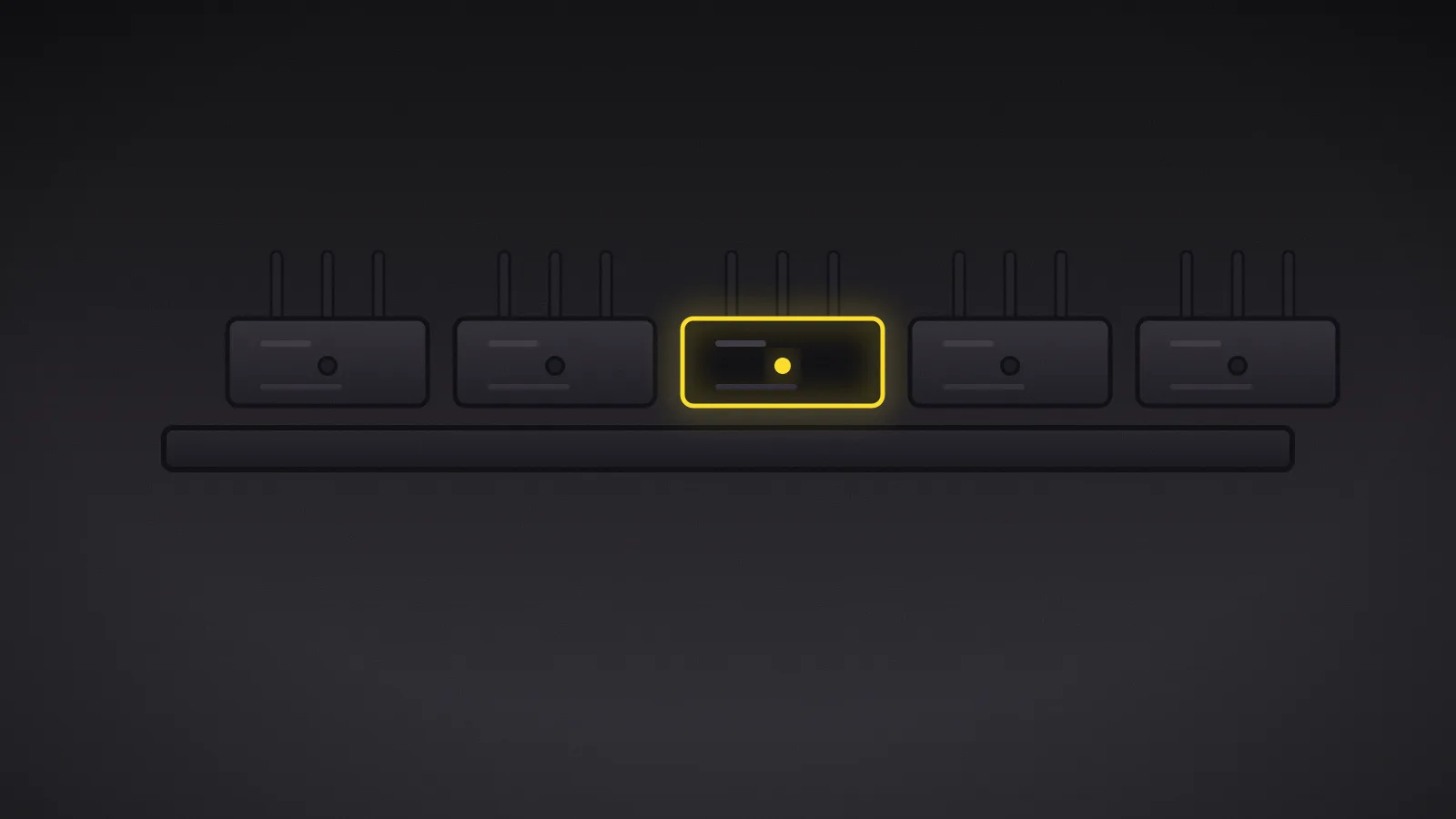
CVE-2026-126253 carries the internal reference FG-IR-26-267 and a CVSS score of 9.3. It sits in the FortiOS process that runs OSPF (Open Shortest Path First), the protocol routers and firewalls use to tell each other which networks they can reach. According to Fortinet, an attacker with no authentication can send specially crafted requests that push the firewall into broadcasting routing announcements. Translated: false routing information can spread to neighbouring routers, which then steer traffic the wrong way or cut it off entirely.
What makes the flaw unsettling is its target. OSPF is a trust-by-default protocol: a router accepts announcements from its peers on the assumption that they are legitimate. BGP hijacks get global attention — Cloudflare Radar publishes routing anomalies around the clock — but the interior equivalent, the one flowing between two FortiGates inside a plant or a campus, stays largely ignored. A firewall that can originate false LSAs (the OSPF announcements) becomes a traffic-steering weapon, exactly what an attacker wants to intercept management flows.
The blast radius is set by configuration: the flaw only bites where OSPF is enabled, which is common on large industrial and enterprise networks with redundant paths. Affected versions span FortiOS 8.0.0 through 8.0.1, 7.6.0 through 7.6.7, 7.4.0 through 7.4.12 and 7.2.0 through 7.2.13. The fixes are 8.0.2, 7.6.8, 7.4.13 and 7.2.14. Fortinet states that no exploitation is known yet — which leaves a narrow but real window to patch before the first weaponized attempts land.
The check comes down to two FortiOS commands:
# Confirm the installed firmware branch
get system status | grep -i version

# List OSPF neighbours: a firewall with no neighbour is not exposed to the flaw
get router info ospf neighbor
The first command places the appliance relative to the fixed versions; the second confirms whether OSPF is actually peering. A FortiGate that exchanges routes with no OSPF neighbour is not exposed to CVE-2026-126253 — which lets you prioritize the genuinely vulnerable boxes instead of patching the whole fleet in a panic. The same triage applies to the management side: a FortiManager whose FGFM port is not reachable from the internet is exposed only to whoever can already reach your management network, a far smaller population than the open internet.
FortiManager: the FGFM channel, already FortiJump’s target
The second half of the release targets the management consoles. CVE-2026-126261 (FG-IR-26-275), rated 9.0, sits in the FGFM (FortiGate-to-FortiManager) protocol — the channel firewalls use to register with FortiManager and receive their orders, on TCP port 541. An attacker with no account, as long as they can reach that port, can execute code or commands on FortiManager or FortiAnalyzer.
Context matters as much as the score. FGFM is the same management channel attackers abused in late 2024 in the flaw known as FortiJump (CVE-2024-47575). Seeing the same trust surface come back two years later with a 9.0 defect points to a structural problem: a channel designed to connect an appliance to its console without friction, now turned against it.
Two more flaws round out the picture. CVE-2026-126229 (FG-IR-26-244), rated 9.1, lets an already-logged-in administrator reach other VDOMs (virtual domains), the partitions that often keep the industrial network separate from the office network on a single console. CVE-2026-126184 (FG-IR-26-229), rated 8.2, requires no login and can break the high-availability pairing between two redundant units. Fortinet published several more FortiManager and FortiAnalyzer fixes the same day — memory corruption, code injection, file-path flaws.
The tipping point is in the version matrix. For CVE-2026-126261, the 7.4 and 7.2 branches of FortiManager have no fix: you must migrate to a patched release. An unpatchable management console is a rare anomaly, and it deserves to be treated as such — it is the device that holds the rules for every firewall on a site, and compromising it changes policy everywhere at once.
What Fortinet’s AI changes about discovery
One detail in the release is easy to miss: according to Red Tiger Security, several of these flaws were found by Fortinet’s own product security team using an artificial intelligence model. That is a quiet but significant first. AI-assisted bug hunting, until now confined to labs and vendors’ research arms, is entering the development lifecycle of a major networking vendor. The consequence is twofold: 9.x CVSS findings land on the table faster, and patch teams face a steadily accelerating publication cadence. For a vendor whose appliances sit at the edge of millions of industrial and enterprise networks, that cadence is now a standing operational cost rather than a periodic surprise.
The verdict
The remediation splits into two tracks: firewalls and consoles. They are different failure modes — one weaponizes your routing table, the other your management plane — and they demand different priorities.
If you run FortiGates with OSPF: patch today. A 9.3 flaw that turns your own routing table against you is not something to defer. Upgrade to 8.0.2, 7.6.8, 7.4.13 or 7.2.14, starting with the firewalls that speak OSPF. Until the fix is applied, restrict OSPF to known neighbours on trusted interfaces, and never on an internet-facing port or a business-facing segment.
If you manage FortiManager or FortiAnalyzer on 7.4 or 7.2: your console has no patch. It is the same FGFM channel that already cost you in 2024, and the only way out is migration to 8.0.1 or 7.6.8. In the meantime, lock down TCP 541 and the admin web interface so they are reachable only from the firewalls and administrators that need them — never from the internet — then audit the accounts and VDOM permissions.
The lesson of the month fits in one sentence: on a network, the routing protocol is no longer a mere mechanism — it is an attack surface in its own right.
References
- Fortinet PSIRT — FG-IR-26-267 (CVE-2026-126253), FG-IR-26-275 (CVE-2026-126261), FG-IR-26-244 (CVE-2026-126229), FG-IR-26-229 (CVE-2026-126184), November 10, 2026
- Red Tiger Security — Fortinet November 2026: Critical FortiOS Routing Flaw and FortiManager Console Fixes (November 10, 2026)
- SecurityOnline — Fortinet Critical Vulnerabilities Hit FortiManager, FortiOS (November 2026)
- Brandefense — Fortinet November 2026 Critical Flaws (November 2026)
You are reading the Networking section.