
CISA adds the Zyxel GS1900 switch flaw to KEV and sets a September 24 patch deadline
On September 21, 2026, CISA added CVE-2026-7273, a stack-based buffer overflow in the CGI of Zyxel GS1900 switches, to its KEV catalog after confirming active exploitation. Lock down the management interface, apply Zyxel’s fix before September 24, and hunt for signs of compromise on exposed devices.
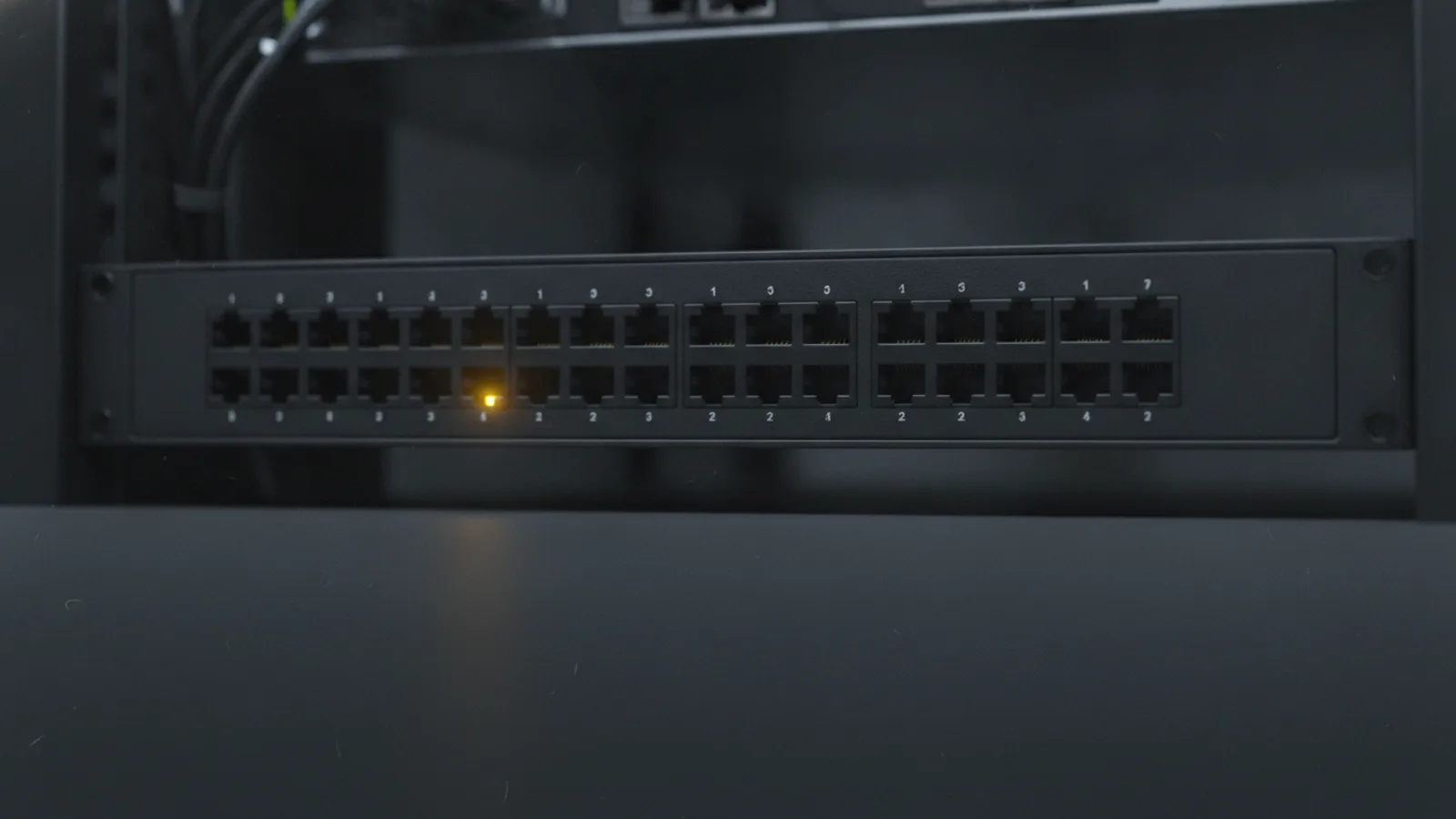
September 21, 2026. CISA adds CVE-2026-7273 to its KEV (Known Exploited Vulnerabilities) catalog. September 24, 2026. The remediation deadline imposed on US federal agencies under BOD 26-04. Zyxel GS1900. The entry-level managed switch family that carries the flaw. Why it matters: a buffer overflow exploited from the local network opens operating-system command execution on a device that sees every packet on its segment.
CVE-2026-7273 is a stack-based buffer overflow, classified CWE-121, in the CGI program behind the management interface of the Zyxel GS1900 series. An unauthenticated attacker on the local network can send a crafted HTTP request that writes past the buffer, corrupts adjacent memory, and redirects execution flow to run operating-system commands on the switch.
What the flaw does
The mechanics are those of every stack overflow. The CGI reads an input — here an HTTP request received without authentication — and copies it into a fixed-size buffer without checking its length. When the input exceeds the capacity, the surplus bytes overwrite the stack, allowing the attacker to redirect the instruction pointer toward code they control.
The result is not a simple crash. CISA describes operating-system command execution, which turns the switch into an attacker-controlled machine. From a compromised GS1900, an operator can read passing traffic, alter the configuration, cut connectivity, move laterally toward other devices, or establish quiet persistence through nothing more than a configuration change.
The severity is high — databases tracking the flaw rate it CVSS 8.8 — but the vector matters as much as the score. The bug is not reachable from the internet without prior access to the local network, which has long pushed this class of flaw down the patch queue. CISA just made clear that reasoning is wrong.
Why an entry-level switch becomes a target
The GS1900 line is made up of managed switches sold to SMBs, branch offices, and operational networks. They are cheap, deployed in volume, and rarely monitored like servers. That is exactly the profile attackers look for when planting a foothold.
A compromised switch occupies a unique position in a network. It sees the traffic of every host attached to it, it can redirect flows, disable ports, or serve as a springboard toward the network core. Once the attacker is already inside the segment, the “LAN-only” boundary offers no protection — that is precisely where they are standing.
The timing of the KEV listing is telling. CISA only adds a flaw to its catalog when it holds evidence of active exploitation in the wild. This is not one more theoretical advisory: attackers are already using the bug, and several outlets report exploitation aimed at data theft on targeted networks.
What CISA is demanding
A KEV listing triggers BOD 26-04, the directive that sets remediation deadlines for federal agencies. The window here is short — 72 hours, with a fix expected by September 24, 2026. That brevity reflects the urgency attached to an already-exploited flaw.
The directive is not limited to patching. CISA also requires forensic triage on affected devices. In practice, teams must inspect GS1900 switches for signs of unauthorized access, suspicious management activity, unexpected configuration changes, and abnormal HTTP requests targeting the administrative interface.
For now CISA has not confirmed use in ransomware campaigns, but the pairing of active exploitation with unauthenticated command execution is enough to justify an immediate response. When no patch is available, the guidance is unambiguous: discontinue use of the affected product.
What this flaw says about network gear
CVE-2026-7273 belongs to a family defenders know well but still handle poorly. Network appliances ship CGI binaries written in C, exposed over HTTP on management interfaces, and memory safety is not guaranteed there. The buffer overflow is a bug class that memory-managed languages have largely erased from web applications, yet it survives in appliance firmware.
The lesson goes beyond Zyxel. The same pattern — a vulnerable CGI, an unauthenticated HTTP request, command execution — has hit other vendors in recent years. Point patching is not enough: the management interface must be removed from the production network, or placed behind authenticated, encrypted access restricted to a handful of administrative addresses.
The “LAN-only” boundary has also shown its limits. Attackers reach the local network through phishing, through an already-compromised endpoint, or through an interconnected partner. A bug like this is not a theoretical threat waiting to be reached — it is the second step of an intrusion that started somewhere else.
Pressure mounts on edge devices
This KEV listing does not land in a vacuum. Edge devices — switches, routers, firewalls, NAS boxes — have become a top target for attackers, and CISA has made them a pillar of its Secure by Design strategy. The logic is simple: a network appliance offers quiet persistence, visibility into traffic, and an entry point into the rest of the estate, all at a low exploitation cost.
Zyxel is no newcomer to this pattern. The Taiwanese vendor has had to patch command-injection and authentication-bypass flaws on its NAS boxes and firewalls in recent years, some of which were also exploited. The GS1900 line illustrates the difficulty: inexpensive, widely distributed switches whose firmware gets less attention than core-network gear.
One scoring detail deserves note. The flaw is exploited from an adjacent network — the CVSS vector is AV:A rather than AV:N. That “adjacent” has long served as an excuse to de-prioritize. But an attacker who already has a foot on the local network no longer needs the internet to strike: the flaw becomes the tool of the second phase, the one that turns user access into infrastructure control. That is exactly the scenario the 72-hour remediation is meant to cut off.
What you should do
The first action is to identify the GS1900 units in your estate and check their firmware against the release Zyxel has published. Entry-level switches are often missing from inventories, which is exactly what makes them the ideal target.
# Locate Zyxel GS1900 switches on a segment (scan management ports 80/443)
nmap -p 80,443 --open 192.168.0.0/24 -oG - | grep -iE 'zyxel|gs1900' || echo "no Zyxel detected by banner"

# Check the firmware version via the CLI (generic example)
ssh admin@<switch-ip> "show version"
The second action is to isolate the management interface. It should be reachable only from a dedicated administration VLAN, never from the user network and never from the internet. A restrictive ACL or a jump host is enough to remove the access this flaw requires.
The third action is the forensic hunt CISA is asking for. Export the switch logs, look for unusual management logins, out-of-window configuration changes, and malformed HTTP requests. If a device shows signs of compromise, reinstall the firmware from a trusted image and rotate every credential that passed through it.
Verdict
CVE-2026-7273 is proof that a buffer overflow in an entry-level switch becomes a national incident the moment it is exploited. If you run Zyxel GS1900 units, apply the patch before September 24, isolate the management interface, and run the forensic hunt CISA requires. If you manage a heterogeneous network estate, treat this as the prompt to audit the exposure of management interfaces on all your appliances, not just Zyxel’s — the next KEV entry may target the vendor you never inventoried.
References
- CISA — Known Exploited Vulnerabilities Catalog (CVE-2026-7273)
- Cyber Security News — CISA Warns of Zyxel GS1900 Switches Flaw Actively Exploited in Attacks (September 22, 2026)
- BleepingComputer — CISA orders feds to patch actively exploited Zyxel flaw (September 2026)
- Security Arsenal — CVE-2026-7273 Zyxel GS1900 Switch Buffer Overflow Actively Exploited