
ESPHome ships its first official hardware and takes self-hosting into physical devices
On August 12, 2026 ESPHome launched its Starter Kit, the first official hardware product in the Open Home Foundation ecosystem. It promises local smart devices with no soldering and no code, and marks self-hosting’s entry into consumer hardware.
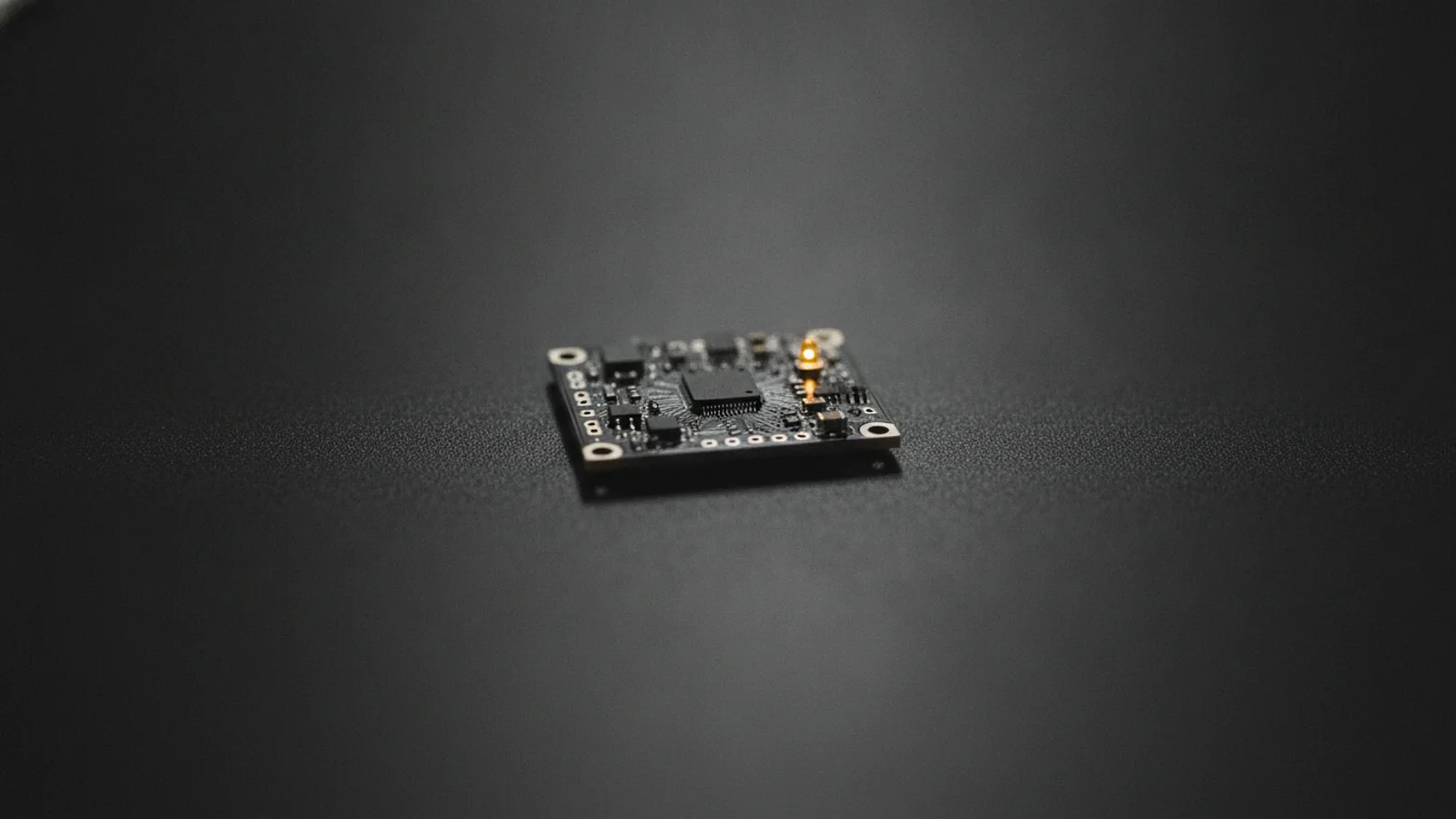
August 12, 2026. ESPHome — the open-source firmware that turns microcontrollers into connected devices — launched its Starter Kit, its first official hardware product. Teased back in April 2026 at the State of the Open Home, it ships in partnership with Apollo Automation and promises to let you build your own sensors and switches with “no soldering, breadboarding, or coding required.” It is a symbolic milestone as much as a commercial one: the Open Home Foundation ecosystem, long confined to software, is entering hardware.
For self-hosting, the event matters. Until now, “self-hosting your smart home” meant running Home Assistant at home and hacking the devices around it. With an official kit, the foundation is saying: we will also hand you the first physical brick, ready to flash.
What ESPHome is, in one sentence
ESPHome takes a cheap microcontroller — typically an ESP32, but also Raspberry Pi’s RP2040/RP2350 — and generates the firmware that makes it talk to Home Assistant or any compatible system. You describe your device in a YAML file: which sensors, which relays, which displays. ESPHome compiles the firmware, installs it, and the device reports its state locally.
The decisive point, and the reason for its success in the self-hosted community, is local control. ESPHome devices talk over the home network without depending on a third-party cloud. No account, no remote API, no telemetry: the object stays yours, and it keeps working when the internet drops.
What the Starter Kit changes
The Starter Kit does not reinvent ESPHome — it lowers its barrier to entry. Historically, building an ESPHome device meant knowing how to solder, understanding a breadboard, and choosing your own components. The kit removes those three steps: pre-assembled parts, a visual Device Builder instead of code, and installation straight from the browser or OTA (over-the-air) over Wi-Fi.
The promise fits in three verbs: choose, build, connect. You pick your board and sensors from a visual catalog, ESPHome installs the configuration, and the device appears in Home Assistant — locally, with no cloud. Those who prefer YAML keep full control: the Device Builder is a doorway, not a cage.
The timing speaks for itself. On August 5, 2026, Home Assistant 2026.8 already put simplicity at the center of its release (“approachable by design”), with less technical settings. A week later, the Starter Kit makes the same direction concrete on the hardware side: make the open home approachable to someone who has never soldered.
Why the Open Home Foundation is entering hardware
The launch is an ecosystem play. ESPHome is now one of the most active projects in local home automation, with hundreds of supported components — sensors, displays, relays. By selling an official kit, the Open Home Foundation capitalizes on that install base and draws a clear path from “discover” to “build”: the kit onboards, the ESPHome catalog takes over, and Home Assistant orchestrates the whole thing.
It is also an answer to a recurring self-hosting frustration: dependence on third-party hardware makers, often closed or tied to a cloud. An official kit guarantees end-to-end compatibility with the open stack, with no need to verify which proprietary firmware is running underneath.
The ridge line: convenience versus the DIY ethos
Let us be blunt: not everyone in the community will read this kit as good news. Part of the ESPHome culture is precisely the tinkering — picking a few-euro ESP32, learning to solder, understanding what you are assembling. A ready-made kit is convenience, but it is also a step toward consuming rather than building.
The debate is old; it runs through all of self-hosting, between “host it yourself” and “buy a box that does it for you.” The Starter Kit positions itself neatly between the two: it does not replace tinkering, it is its entry point. The Device Builder hides complexity at first, but YAML stays available to anyone who wants to go deeper. It is exactly the compromise Home Assistant found on the software side, ported to hardware.
The real question remains the one no press release answers: will the kit deliver on durability? A home-built connected device depends on component quality, update support, and the owner’s ability to repair it. An official kit answers part of that — the firmware is open and ESPHome maintains its releases — but the longevity of the hardware itself has yet to be proven over time.
Who it is for, concretely
The targeting is clear. If you are a beginner in local home automation and want a first sensor with no soldering and no code, the kit is built for you: that is its exact audience. If you are already comfortable with an ESP32 and a soldering iron, the kit will teach you nothing technical — at best it saves you time on a quick prototype. If you want a device to deploy at scale for non-technical relatives, the kit becomes a way to bring them into your Home Assistant stack without personally supporting them for weeks.
One point deserves emphasis for smart-home operators: every ESPHome device is one more device on the local network. Deploying dozens of objects assumes a Wi-Fi network that holds the load, and local control assumes minimal network segmentation if you want to stop a compromised device from talking to the rest of the LAN. The kit simplifies assembly, not the network architecture that hosts it.
What happens after you unbox it
The value of the kit is not the box itself but what it plugs into. The onboarding flow matters, and it is where the “no code” promise is either kept or broken. In practice it runs: flash the device from the browser, adopt it in ESPHome, then expose it to Home Assistant, where it becomes an entity like any other — a sensor, a switch, a display — that you can fold into automations and dashboards. Because everything talks locally over MQTT or the native API, the round trip stays inside the LAN, and the device keeps reporting even when the broadband line is down.
That local loop is the real reason the kit belongs in a self-hosting conversation rather than a consumer-electronics one. A commercial smart plug answers to a vendor’s cloud and dies with the vendor’s decision. An ESPHome device answers to you: you choose when to update the firmware, you decide what it reports, and you can reflash it when your needs change. The kit’s job is to make that sovereignty cheap to reach. The trade-off, as ever, is that sovereignty is not free: the responsibility for updates, backups, and network hygiene moves onto your shoulders the moment the box arrives.
Verdict
The Starter Kit is good news for the ecosystem and a coherent commercial bet for the Open Home Foundation. It does not make ESPHome more powerful — it makes it more approachable, which is exactly what self-hosting must do to stop being a tinkerers’ club.
The recommendation is conditional but sharp: if you want your first local smart devices without learning to solder, buy the kit — it is the shortest path to a sensor you genuinely own, and the Device Builder is a real entry point. If you already solder and your drawer overflows with ESP32s, skip it: the kit brings you no new capability, only convenience. And if you deploy for relatives, use it as a Trojan horse: an official kit persuades better than a wiring diagram. Self-hosting just gained a box — whether the community gains tinkerers along with it remains to be seen.
References
- ESPHome — Introducing the ESPHome Starter Kit, August 2026
- Home Assistant Blog — Get ready to start building: The ESPHome Starter Kit is here, August 12, 2026
- Home Assistant Blog — 2026.8: Approachable by design, August 5, 2026