
Self-Hosting Comes of Age in Summer 2026 — Multi-Node Docker Compose, API Paywalls, and the End of Tinkering
The self-hosted ecosystem of **Summer 2026** hits a maturity milestone: tools like **Uncloud** and **Komodo** turn Docker Compose into production orchestration, while third-party API shutdowns force technical self-reliance. The homelab is no longer a lab — it's infrastructure.
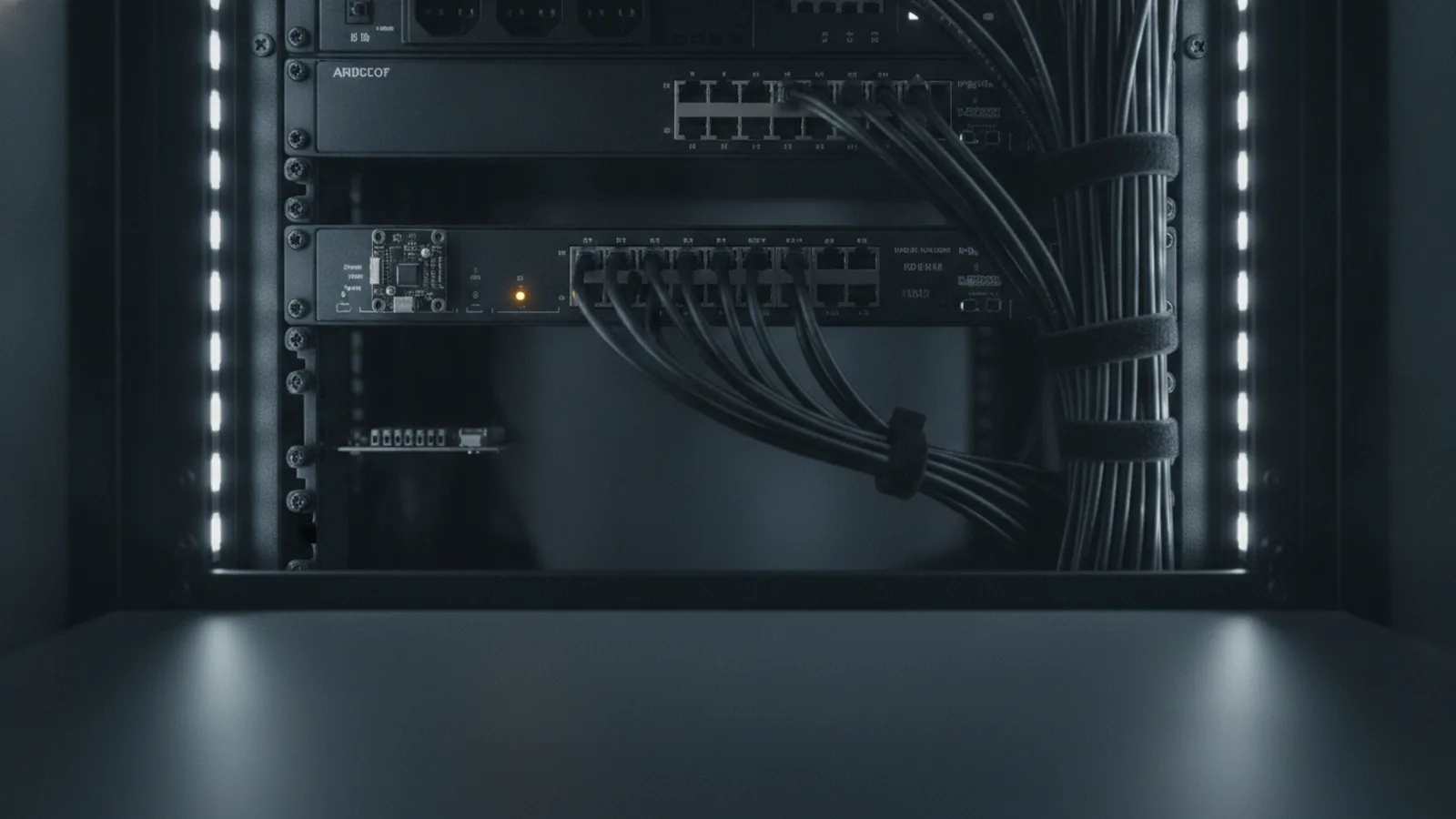
August 7, 2026. The selfh.st weekly newsletter paints a picture of an ecosystem in transition. Proxmox officially lands on ARM64. Two new projects — Uncloud and Komodo — promise to extend Docker Compose across multiple nodes without touching Kubernetes. Trakt locks its API behind a $4.99/month paywall, forcing thousands of Jellyfin and Plex users to rethink their media stacks.
It’s no coincidence that these announcements arrive together. Self-hosting in 2026 is not what it was in 2020. It’s transitioning from “it works on my machine” to “it runs in production for my family, my friends, and my community.” And that transition demands new tools.
Multi-node Docker Compose — the new frontier
Uncloud and Komodo tackle the same problem: moving from single-server Docker Compose to multi-node deployment without migrating to Kubernetes. Their promise is radical: keep your compose.yml, add a distribution layer, and your containers run on three machines instead of one.
How does this differ from Docker Swarm? Simplicity. Swarm exists, it works, but it imposes a swarm service model (docker stack deploy) that is not a standard compose.yml. Uncloud and Komodo want your existing Compose file — the one you already maintain for your Jellyfin, Nextcloud, Immich, and Vaultwarden stack — to become multi-node without modification.
The positioning is clear: Kubernetes is too heavy for a three-machine homelab. Swarm is in semi-abandonment. The gap is wide open, and these newcomers intend to fill it.
1Panel, also mentioned in the newsletter, takes a different approach: a modern, open-source VPS control panel built for self-hosting. The alternative to Cockpit and Webmin that many have been waiting for — with an interface that doesn’t look like it shipped in 2008.
Third-party API shutdowns accelerate self-reliance
Trakt — the watch-tracking service used by thousands of self-hosters to sync their Jellyfin, Plex, and Kodi libraries — announced it is locking its API behind a $4.99 per month subscription.
For an individual user, $5 isn’t a crisis. But for a family of four running Jellyfin with separate Trakt profiles each, the costs add up. And for the tens of thousands of deployments that relied on the free API for years, the message is blunt: your stack depends on a service you don’t control.
This announcement is part of a broader pattern. GitHub restricts its free APIs. Twitter/X closed theirs. Reddit did the same. Every time, self-hosters feel it first — because they integrate more APIs than the average SaaS user, and because they don’t have an enterprise contract to negotiate with.
The ecosystem’s response is predictable and swift. Open-source alternatives emerge for every API that closes. For Trakt, projects like Ryot and MediaTracker offer self-hosted watch tracking. The lesson isn’t “don’t use third-party APIs” — it’s “have a self-hosted fallback ready when the API shuts down.”
Proxmox on ARM64 expands the market
The official arrival of Proxmox VE on ARM64 — announced the first week of August 2026, even if Raspberry Pi support remains unofficial — is a strong signal. ARM boards are no longer hobbyist toys. They’re machines capable of running production hypervisors.
A Proxmox cluster on three ARM64 boards — total power consumption under 30 watts, completely silent — can virtualize a dozen self-hosted services. For a hardware budget under €400, you get a mini-datacenter that won’t spike your electricity bill.
This lower barrier to entry is crucial for self-hosting adoption. No more noisy, power-hungry x86 towers. A silent ARM board and an NVMe SSD is all you need.
Home Assistant 2026.8: a port change that speaks volumes
Home Assistant 2026.8 changes the default port for new installations from 8123 to 80. It’s a minor technical detail. But it’s also a manifesto.
Port 80 is the standard HTTP port. By adopting it, Home Assistant is saying: “I am no longer a secondary service hidden behind an obscure port. I am the central hub of your smart home — as standard as your router.” New installations no longer need to remember the port. The interface is at http://homeassistant.local, just like any consumer device.
Port 8123 remains active for existing installs. But the message is clear: home self-hosting is targeting plug and play.
What this maturation means for you
Summer 2026 marks an inflection point for self-hosting. The signals are converging:
- Infrastructure becomes declarative: Docker Compose 5.4 introduces reconciliation, Uncloud and Komodo extend Compose to multi-node. You describe the desired state — the tool delivers it.
- Hardware becomes accessible: ARM64 lowers both cost and power consumption. A production cluster fits in a fanless enclosure.
- Third-party APIs become a liability: every external dependency is a ticking clock. End-to-end self-hosting — from watch tracking to DNS — becomes the norm.
- Applications target mainstream users: Home Assistant moves to port 80. Immich rivals Google Photos. Nextcloud Hub 10 replaces Google Workspace. The UX is catching up to SaaS.
The 2020 homelab was an experimentation playground. The 2026 homelab is production infrastructure — running home automation, family photos, administrative documents, and household media. The bar has been raised. The tools have followed.
The verdict
If you already self-host, Summer 2026 is the time to level up. Migrate your Docker volumes to declarative configurations with Compose 5.4. Test Uncloud or Komodo to distribute your stack across nodes. Audit your third-party API dependencies and prepare a self-hosted fallback for each.
If you don’t self-host yet, the barrier to entry has never been lower. A $100 ARM board, a $50 SSD, and you have a machine capable of running a dozen services. Self-hosting in 2026 is no longer reserved for infrastructure engineers — it’s accessible to anyone who can read a compose.yml.