
Raspberry Pi raises the 2 GB Pi 4 and Pi 5 by $12.50 and buries the $35 computer
On 1 October 2026, Raspberry Pi raised the 2 GB Pi 4 and Pi 5 by $12.50 each, caught up by memory costs that keep climbing. The 2 GB Pi 4 now costs $67.50 and the 2 GB Pi 5 $77.50: right-size your purchases and stop paying for RAM you don’t need.
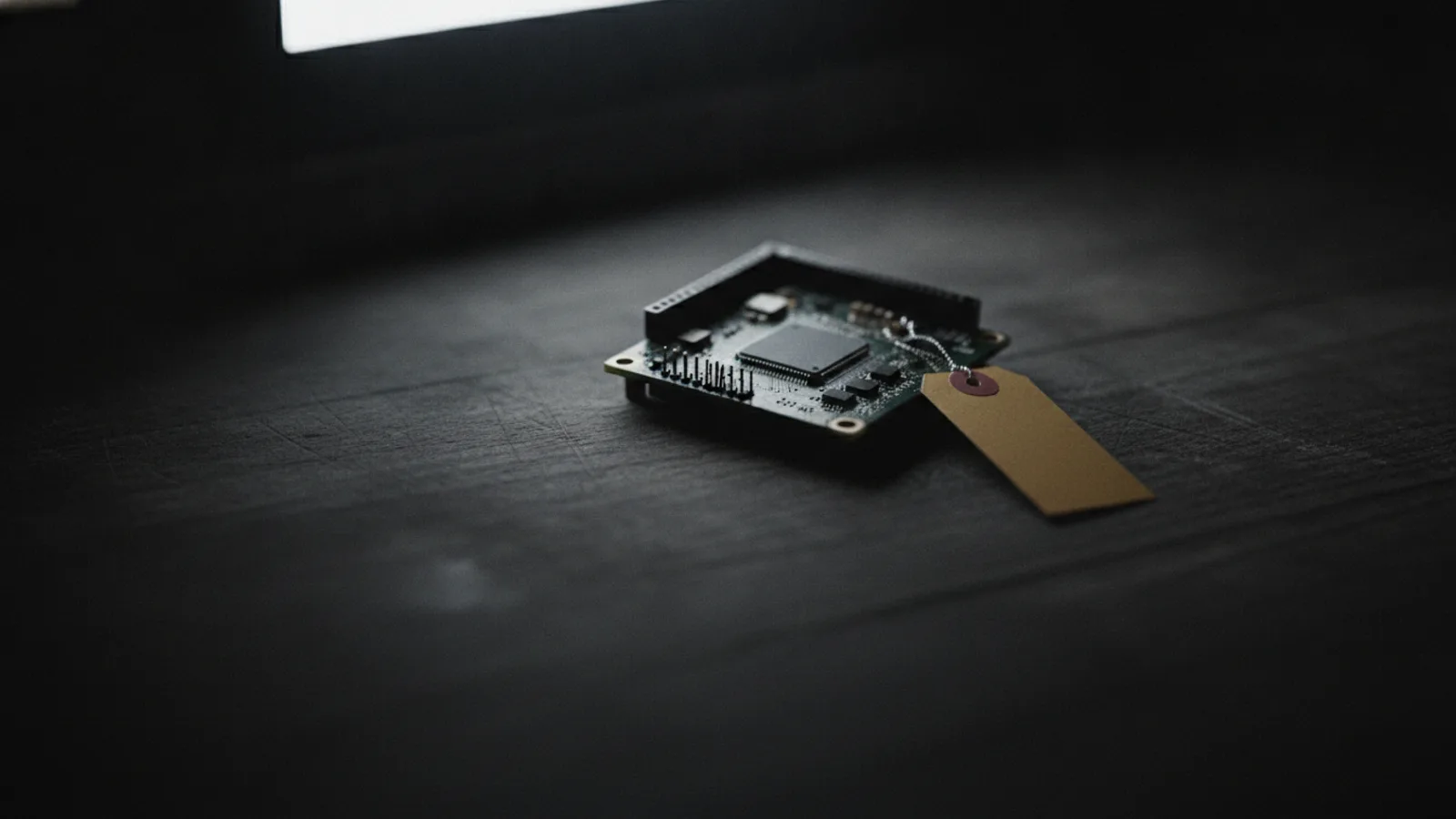
1 October 2026. Raspberry Pi raises the price of the 2 GB Pi 4 and Pi 5 by $12.50 each, taking the former to $67.50 and the latter to $77.50. April 2026. The company had managed to shield the 1 GB and 2 GB variants from its previous round, touching only the higher-density models. Summer 2026. DDR5 has quintupled in a year on the spot market, and the bill has finally reached the most emblematic board in self-hosting. Why it matters: the “$35 computer” that served as the entry point for a generation of homelabs now costs $67.50 in 2 GB form, and the trend is not over.
Memory is pulling prices, not the board itself
The Raspberry Pi announcement is unambiguous about the cause. The cost of memory has “risen very steeply over the past two years” and keeps climbing, forcing the company to pass the increase onto the products that carry the most of it. Back in April 2026, it held the line on the 1 GB and 2 GB models while raising the higher-density variants. On 1 October 2026, that choice became “unsustainable”: the 2 GB models take $12.50, roughly +23 % for the Pi 4 (from $55 to $67.50) and +19 % for the Pi 5 (from $65 to $77.50).
What is spared says something about the economics. The 1 GB Pi 4 and Pi 5, plus the 2 GB Compute Module 4 and 5, do not move. Raspberry Pi is therefore protecting the entry tier — the board you slide into a gadget, a sensor, or a lightweight installation — and concentrating the pain on the tier homelabs actually use, the one that runs Docker, a media center, or a small server.
The $35 computer is dead, and that is not a metaphor
The 2 GB Pi 4 sold for $35 for years. That same product now costs $67.50, close to double in a few years. The rise is not new: The Register captured it in a headline — “Once a $35 computer, the 2 GB Raspberry Pi 4 now costs $67.50”. The foundation’s founding promise, a full computer for the price of a paperback, erodes mechanically with every wave of memory increases.
That drift has a concrete cost for self-hosting. A three-node cluster of 2 GB Pi 5 boards for a small Kubernetes setup now runs $232.50 in boards alone, before power supplies, cases, and storage. At that price, the comparison with a used x86 mini-PC — often more powerful, with 16 GB of RAM and a SATA port — becomes serious. The ARM board keeps its advantages of power draw and silence, but it no longer wins on price by default.
The price trajectory tells a story
The 2 GB Pi 5 is the clearest example of the escalation. Launched at $50 in August 2024, it went to $65 in the April 2026 round, then to $77.50 today — a +55 % rise in a little over two years. The 2 GB Pi 4 took the opposite path from its founding promise: sold at $35 for years, it now costs $67.50. Each step has a single cause — memory costs — but the cumulative effect changes the nature of the product: what was an impulse buy becomes a budget decision.
For the self-hoster, the consequence is a shift in the equilibrium point. Where a Pi used to be the obvious answer to “I need a small, quiet server,” the question now becomes “what does a useful gigabyte cost.” A used x86 mini-PC at $150 with 16 GB of RAM offers eight times the memory of a 2 GB Pi 5 at a comparable price, at the cost of slightly higher power draw and noise. The Raspberry Pi keeps its edge on GPIO, ecosystem, and power efficiency, but that edge now has to be asserted, not assumed.
What Raspberry Pi recommends, and what to take from it
The post by Eben Upton, the foundation’s CEO, boils down to one operational piece of advice: don’t pay for memory you don’t need. He points toward the Pi 3B, 3A+, and 3B+ for projects that don’t require Pi 5-class performance, and reminds readers that 1 GB is plenty for many use cases. For business customers, he points to guidance on memory optimisation.
Behind the pleasant tone, the message is a reality check: a self-hoster sizing their fleet must now reason in terms of useful gigabytes, not habit. A 1 GB Pi 5 at a stable price will run Pi-hole, a WireGuard relay, or a small file server without trouble. Reserving the 2 GB-and-up models for the workloads that genuinely need them — databases, several containers, transcoding — is now the right budget discipline.
Buying in the right place becomes a pricing question
The announcement also stresses Approved Resellers, more than a hundred of them spread across every continent. The reason is pricing as much as trust: approved resellers commit to the official maximum prices, while some unauthorised vendors charge inflated prices, or even ship products that are not what they claim to be. In a period of memory scarcity, the gap between the official price and the “market” price widens, and that is exactly where abusive margins thrive.
For a homelab buying today, the practical consequence is twofold. First, buy early if a 2 GB project is certain — the foundation promises nothing about the timeline of any reversal. Second, check the public price before buying, and avoid vendors who add their own margin on top of the official tariff.
The real subject is not Raspberry Pi, it is memory
Isolating this increase would be a mistake. The same root cause — DRAM costs, pulled by demand from AI accelerators — already made DDR5 quintuple in a year, a shock we documented for homelabs back in August 2026. Raspberry Pi is not an isolated case: it is the most visible symptom of a squeeze that hits everything carrying RAM, from servers to smartphones to embedded boards.
The foundation writes it in plain terms: the situation “won’t last forever,” and it commits to reversing its own increases when memory comes down. That is a promise buyers should read for what it is — an expectation, not a timeline. Nobody knows when the memory market will loosen, and the only certainty is that current prices reflect a supply shock, not a discount on the product.
Verdict
If your project fits in 1 GB, don’t buy 2 GB “just in case”: the 1 GB Pi 4 and Pi 5 hold their price, and a Pi 3B+ still covers a large share of self-hosting needs. If a 2 GB model is genuinely required, order it now from an approved reseller rather than betting on a price relief nobody has dated. If you are sizing a whole fleet, redo the math against a used x86 mini-PC: the ARM board no longer wins on price by default, only on power draw, silence, and ecosystem. The lesson goes beyond Raspberry Pi — as long as memory stays expensive, every unused gigabyte is a luxury paid for twice.
References
- Raspberry Pi — Price increases for 2GB Raspberry Pi 4 and Raspberry Pi 5 (1 October 2026)
- The Register — Once a $35 computer, the 2 GB Raspberry Pi 4 now costs $67.50 (2 October 2026)
- TechPowerUp — Raspberry Pi Raises Prices of 2 GB Raspberry Pi 4 and Pi 5
- The Verge — PC RAM shortage and pricing spike