
Schneider Electric buys Shelly Group for €1.2 billion and tests the limits of local-first
Schneider Electric announced a €1.2 billion voluntary takeover bid for Bulgaria’s Shelly Group on 24 September 2026, at €70 a share. For self-hosters who run Shelly relays over MQTT and Home Assistant without any cloud, the question is whether the open APIs outlive the industrial buyer.
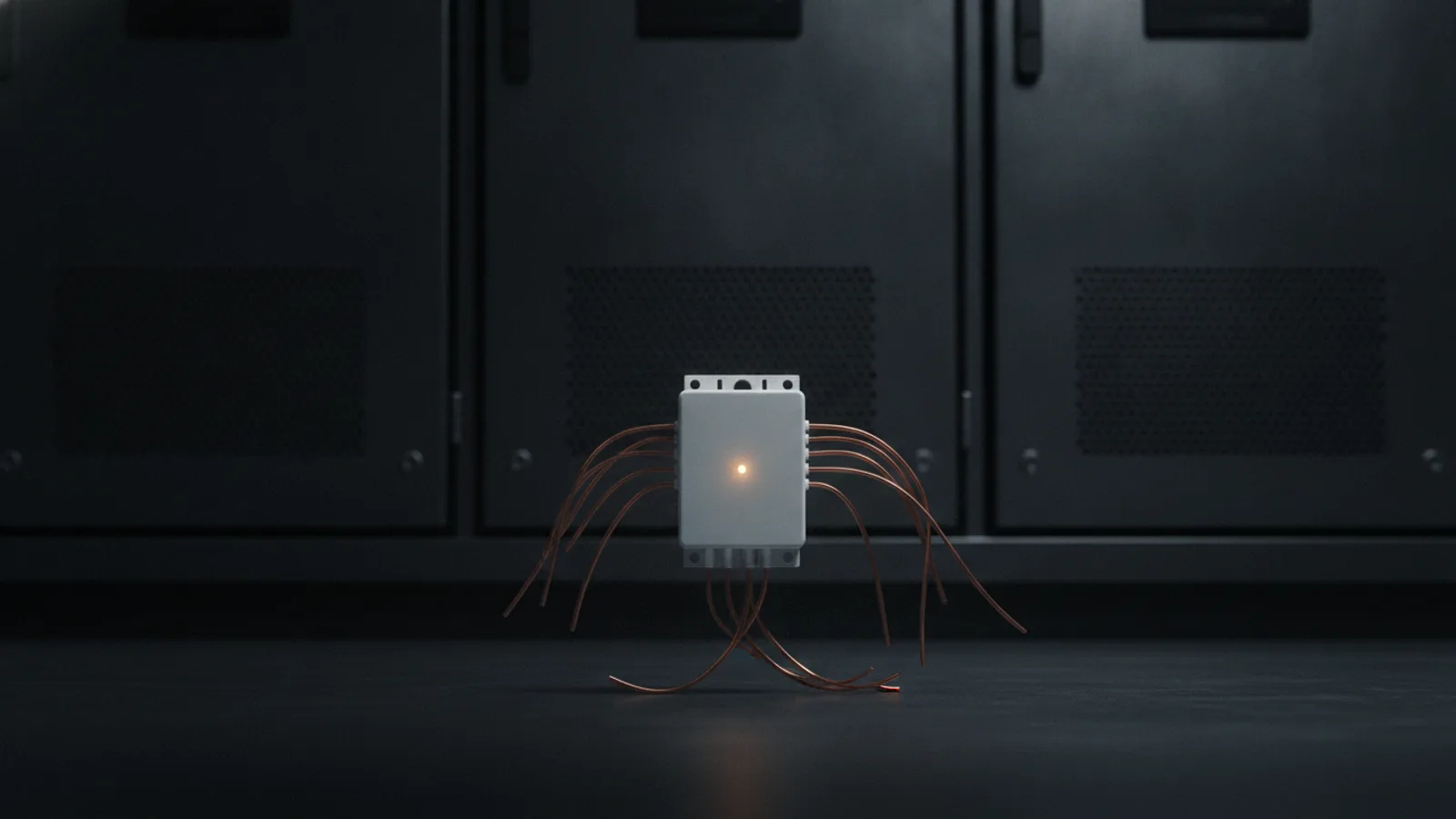
24 September 2026. Schneider Electric announces a €1.2 billion voluntary takeover bid for Shelly Group. €70. That is the per-share price offered for the Bulgarian maker of connected relays. July 2026. The first reports of talks, carried by Bloomberg, already pointed to a buyout of the smart-home specialist. Why it matters: Shelly is one of the few home-automation vendors to sell fully local control as a commercial argument, and that positioning is now being absorbed by an industrial group with 150,000 employees.
A €70-per-share bid backed by the founders
The offer from Schneider Electric is not idle market chatter. It takes the form of a voluntary public takeover, preceded by an investment agreement signed by the two companies and supported by Shelly’s founders. The proposed price, €70 per share, values the business at around €1.2 billion, or roughly $1.4 billion.
The structure has been confirmed by multiple wire services. Reuters describes “a €1.2 billion bid for smart-home device maker Shelly”. Bloomberg pegs the deal at $1.4 billion. Dealroom narrows it to the unit price: €70 a share. The announcement on 24 September 2026 follows talks that began back in July 2026, a familiar rhythm for this kind of cross-border tie-up.
Shelly Group trades on the Bulgarian Stock Exchange under the ticker SLYG. The company, long known as Allterco, built its name on a range of cheap modules — Wi-Fi relays, switches, plugs, temperature and energy sensors — that are controlled through a mobile app but, crucially, run without depending on any cloud.
Shelly, the quiet champion of local control
What separates Shelly from the competition comes down to one word: local. Where most consumer smart devices demand a vendor account and a permanent link to a remote server, a Shelly module exposes a local HTTP API, speaks MQTT, and keeps working even when the Internet is cut.
That is exactly the architecture that won over the self-hosting crowd. In Home Assistant, the official Shelly integration discovers devices on the local network over CoAP and then talks to them directly, bypassing the manufacturer’s cloud. A user can automate roller shutters, radiators, or lighting while keeping every byte of traffic inside their own four walls.
The business model follows from that. Shelly sells hardware, not subscriptions. The app is free, the cloud is optional, and the firmware exposes its settings locally. For an audience wary of gadgets that stop working the day the vendor switches off a server, that is a decisive argument — much as Zigbee and Z-Wave were before it.
Why Schneider wants a maker of €20 relays
The industrial logic for Schneider Electric is straightforward. The French group, a global specialist in energy management and automation, wants a seat in the connected home and, above all, in residential energy management. Measuring consumption, controlling heating, shaving demand peaks, preparing an electric-vehicle charge — all of these need cheap, mass-deployable sensors, which is precisely Shelly’s territory.
The acquisition also extends a recent buying spree. In June 2026, Schneider Electric announced the purchase of Cognite, a Norwegian industrial-data specialist, for $3.1 billion. Adding Shelly rounds out the portfolio on the residential and consumer side, a segment where the group was historically thinner than in industry and data centers.
Finally, the valuation is modest relative to the upside. €1.2 billion for a brand with a loyal user base and an ecosystem of local integrations is a reasonable bet for a group whose market capitalization comfortably exceeds €100 billion.
The risk: local APIs becoming a dying sales pitch
For a self-hoster, the question is not whether the deal closes but what it does to Shelly’s local-first DNA. The precedents are not encouraging. When a large group absorbs a brand carried by a technical community, the usual trajectory runs through gradual integration: unified accounts, migration to a proprietary platform, then the closing or degrading of open interfaces.
The scenario the Home Assistant community fears is simple. Schneider could eventually steer new products toward its Wiser or EcoStruxure ecosystems, reserve certain features for the cloud, and make local APIs harder to reach on future generations. Existing hardware would keep working, but the roadmap would drift away from the local-first approach that made the brand.
A dose of perspective is also warranted. The agreement is a voluntary takeover, not a dissolution. The founders remain involved, and nothing indicates that an API shutdown is planned. Schneider has every incentive not to break the machine that justified the price: local integrations are an asset, not a cost.
What the history of local-brand buyouts teaches
The Shelly acquisition is not an isolated case. The movement of industrial giants toward brands loved by tinkerers and self-hosters follows a recurring pattern: buy the community, then monetize it. The case of Plex — long the darling of self-hosted media libraries before multiplying paid services — is in everyone’s memory.
The difference here lies in the nature of the product. A Shelly relay is a physical object that works without an account. As long as the firmware and the MQTT protocol stay exposed, the user keeps control, whoever owns the brand. That resilience by design is what separates local hardware from an online service: a buyout cannot switch off a device that never needed the cloud to run.
That is also what makes the deal acceptable to many self-hosters. The risk is not that installed relays stop working, but that the next generation of products is less open. Vigilance should therefore focus on the hardware roadmap, not the existing fleet.
What the Home Assistant community is watching
For the self-hosting crowd, the anxiety is concrete rather than philosophical. Shelly’s official Home Assistant integration relies on the local API and MQTT to talk to devices without a cloud round-trip. If a future firmware or a future product line gate that path behind a Schneider account, automations that depend on local-only control would need rework, and the resale value of the hardware would quietly drop.
The reasonable position is to watch two things: the first firmware release shipped under the new owner, and the first new product generation. If local MQTT and the HTTP API remain documented and enabled, the acquisition is business as usual. If they start disappearing from marketing pages or release notes, the warning signs will be visible long before anything breaks in an existing installation. That early-warning window is the real asset self-hosters hold.
Verdict
If you already own Shelly modules, change nothing: local control, MQTT, and the Home Assistant integration keep working with no cloud dependency, and nothing in the deal threatens the installed base. If you are thinking of buying in, wait for the first product range launched under the Schneider banner to judge whether the local APIs survive — that is where the real trajectory will be decided. If you sell home automation, the lesson is elsewhere: local-first has become an asset valuable enough to attract a giant, and the market now rewards brands that do not lock customers into a cloud. The Shelly buyout does not mark the end of local control: it confirms its value.
References
- Reuters — Schneider to launch €1.2 billion bid for smart-home device maker Shelly (24 September 2026)
- Bloomberg — Schneider to Buy Smart Device Firm Shelly in $1.4 Billion Deal (24 September 2026)
- Dealroom — Schneider Electric bids €70 a share to take over Shelly Group (24 September 2026)
- selfh.st — Self-Host Weekly, 25 September 2026